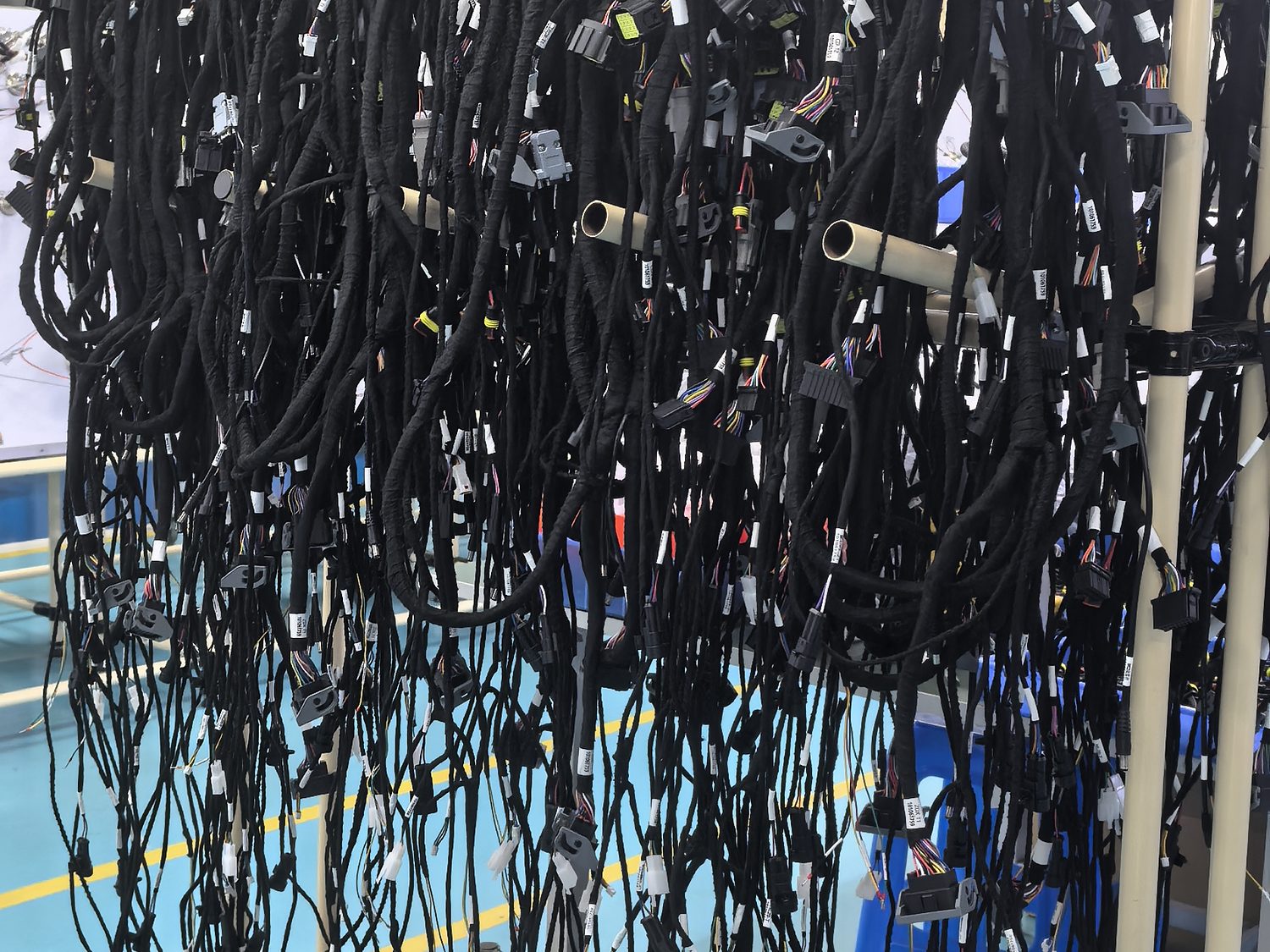
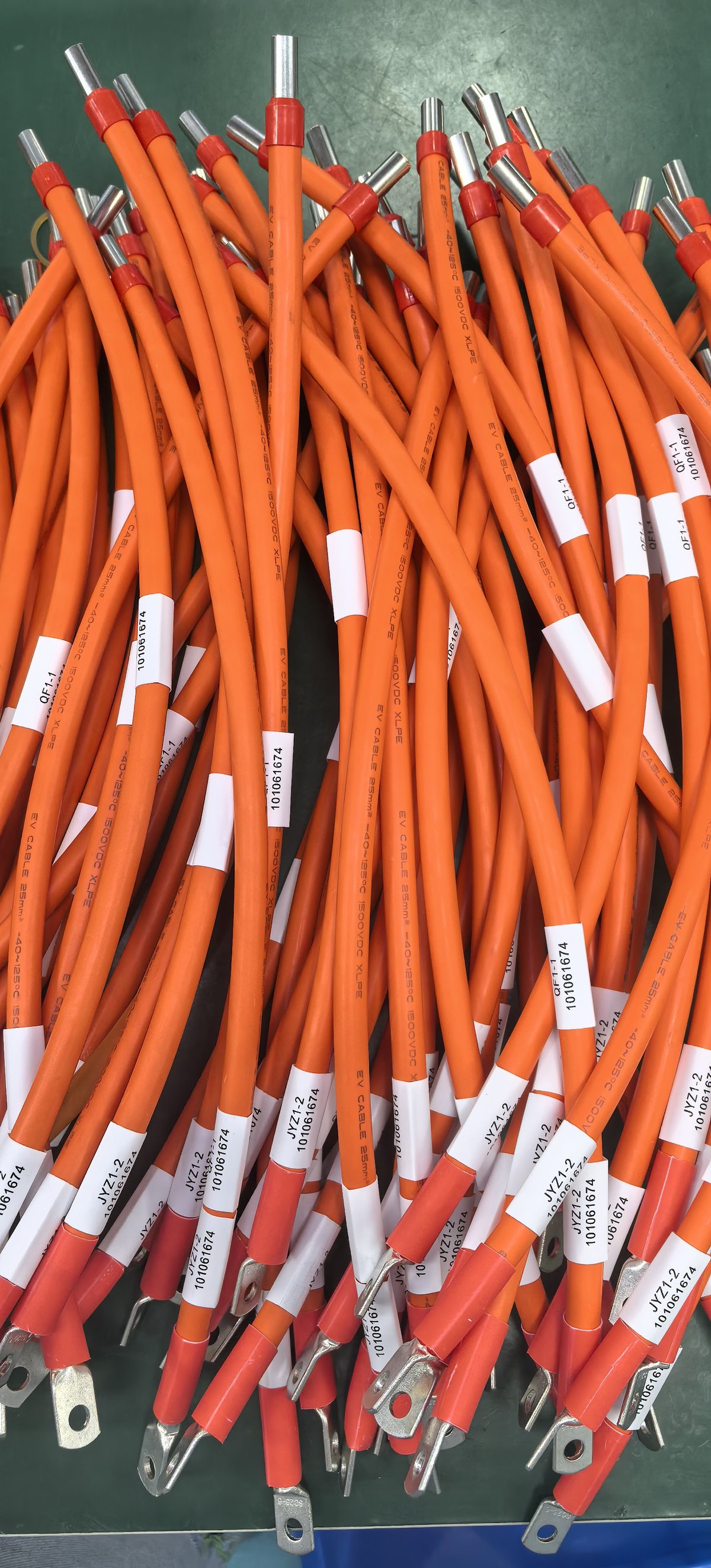
Insulation material is chosen on three axes: the temperature the conductor will reach, how flexible the cable has to stay at the cold end of its range, and what the cable has to survive physically — abrasion, chemicals, repeated flexing. No material wins on all three. PVC is cheap and tough and gives up at high temperature; XLPE handles heat and gives up some flexibility; silicone is flexible across a wider range than either and is the least abrasion-resistant of the three.
The comparison
Temperature is the first cut, but not the only one
The temperature rating on a datasheet is measured on the insulation, not on the assembly. The conductor runs hotter than the ambient around it, and it runs hotter still inside a bundle where several circuits are loaded at once. Two practical consequences:
- Design against the conductor temperature at the worst case, not the ambient. An under-hood harness sitting in 90 ℃ air with a circuit at full load is a different material question from the same harness idling.
- Derate inside the bundle. The quoted current capacity of a conductor assumes certain conditions. In a dense harness the same conductor carries less current for the same temperature rise, which is why a circuit that passes on the bench can exceed its insulation rating in a fully dressed loom.
Where PVC quietly fails
PVC is the default for good reasons — it is cheap, it is tough, and it processes well — but the failure mode that catches people out is not heat, it is cold. PVC stiffens progressively as the temperature falls, well before its rated low limit. In a fixed routing that is harmless. In a door loom, a seat harness or anything that flexes, the combination of a stiff insulation and a bend radius that was checked at room temperature is how jackets crack in service.
The fix is not always to change material. Re-checking the minimum bend radius at the cold extreme, or moving the flexing section to a flexible conductor construction, is often cheaper than upgrading the whole bundle. What does not work is accepting a bend radius validated at 20 ℃ for a part that operates at −30 ℃.
Where silicone quietly fails
Silicone is chosen for temperature and low-temperature flexibility, and it earns both. Its weakness is mechanical: silicone cuts, tears and abrades more readily than either of the other two, and it has lower dielectric strength per millimetre, so the wall has to be thicker. Three consequences that show up in a real programme:
- The bundle gets larger. Thicker walls on the same circuit count mean a bigger outside diameter, which can turn a routing that fit into one that does not. This is discovered late if the material is chosen after the routing was drawn.
- Protection becomes mandatory, not optional. A silicone harness in a chafing location needs conduit, sleeving or a proper clip spacing; leaving it unprotected because the material is "premium" is the reverse of the right conclusion.
- Termination can need support. Silicone takes strain relief less well than a stiffer jacket, so an unsupported termination that was fine in PVC may need a boot or a clamp.
Specifying it: per circuit, not per harness
The most common specification mistake is a global material call on the drawing. A harness is almost always a mix, and naming the material per circuit is both cheaper and more buildable:
Other materials worth knowing about
Three others come up often enough to recognise, even if the decision usually lands on the three above:
- PTFE — very high temperature and superb chemical resistance, at a cost and stiffness that rules it out of most general harness work.
- TPE and TPU — the middle ground between PVC and silicone on flexibility, with much better abrasion resistance than silicone. Common on drag-chain and continuous-flex cable.
- Cross-linked PVC — a narrower family that improves on PVC's thermal performance without moving to XLPE, useful where the existing PVC tooling has to be kept.
Where the choice lands by family
- An automotive harness is normally PVC in the cabin and XLPE under the hood, with silicone only on the circuits that reach exhaust temperatures — see the design checklist for how the zone temperatures get stated on the drawing.
- On an EV high-voltage assembly, the insulation choice comes with a shield and a temperature class that have to be satisfied together, and the wall thickness is driven by both the voltage and the shielding construction.
- On a construction machinery harness, the low-temperature requirement usually decides the choice, because the machine works in the cold as well as the heat and the harness has to survive both.
- On an industrial automation harness, continuous flexing dominates, and the answer is more often a flexible conductor construction in XLPE or TPU than a silicone jacket.
- On a home appliance harness, PVC covers nearly everything except the circuits near a heating element, where the appliance standard usually dictates the answer.
Frequently asked questions
Is silicone insulation always better than PVC or XLPE?
No — it is better at exactly two things, high temperature and flexibility at low temperature, and worse at abrasion resistance, dielectric strength per millimetre and cost. A silicone harness in a chafing location needs more mechanical protection than a PVC one, not less, and its thicker wall can make a bundle that no longer fits the routing it was designed for. The usual engineering answer is XLPE as the default with silicone on the circuits that genuinely reach the high temperatures, which requires the drawing to state a temperature per zone rather than one figure for the whole harness.
What temperature rating do I need for an under-hood harness?
Start from the ambient at the hottest point the harness runs, then add the conductor's own temperature rise at full load, then add margin for a bundle where several circuits are loaded together — because a conductor in a dense loom gets hotter than the same conductor in free air at the same current. Under-hood work generally lands on a 125 ℃ class, which is XLPE territory. The circuits that also sit close to the exhaust or the turbo are a separate case and are usually specified individually in a high-temperature material rather than pushing the whole harness up a class.
Can I mix insulation materials in one harness?
Yes, and most harnesses do. Mixing is standard practice and is usually the cheapest correct answer, provided the drawing names the material per circuit or per zone rather than globally, and provided the build can tell the materials apart — which in practice means either a colour code or a distinct part number per circuit. The two things to avoid are a global call that forces an expensive material onto circuits that do not need it, and an unstated mix that leaves the choice to the line and produces a harness that differs between builds.

 Guides & Insights · Sep 24, 2026