They are not alternatives, and a supplier who presents them as a choice has already told you something. ISO 9001 is a general quality management system that any company in any industry can be certified to. IATF 16949 is the automotive quality management system standard, built as a supplement to ISO 9001 — a company cannot hold it without also meeting ISO 9001. For an automotive production part, IATF 16949 is the one that matters, and ISO 9001 alone means the supplier has a functioning quality system but has not been held to automotive requirements.
What most buyers miss is the next step. A certificate does not cover a company; it covers a defined scope. The scope sentence on the certificate is what tells you whether the certified activity is the activity you are buying.
What each standard actually requires
The rows that change what you receive are the ones about control plans and change control. An ISO 9001 supplier is asked to manage change; an IATF supplier is asked to tell you before the change ships. On a harness, that difference covers wire supplier substitution and terminal plating changes — both of which are invisible in a finished part and both of which show up as a field failure eighteen months later.
The scope sentence is the part that carries the risk
Every IATF 16949 certificate states what it covers. Read that sentence before you read the certificate title, because the same title appears on certificates with very different coverage:
- Manufacturing only. The supplier is certified to build what you specify. Product design under Clause 8.3 is excluded, so the design responsibility — lengths, routing, wire gauge, fault-current assumptions — sits with whoever drew the part. Usually that is you.
- Manufacturing and design. The supplier holds design responsibility for the parts in scope, and is audited on it.
- Site-specific. An IATF certificate covers one manufacturing site. A company with three plants can hold a certificate for the one you are not buying from.
None of these is a defect. A manufacturer-only scope is the normal and honest scope for a build-to-print harness supplier, and it is the scope we hold. The problem is only when the scope is not read and the title is treated as an answer.
What to ask for beyond the certificate
The certificate gets a supplier onto your shortlist. These are what decide the award, and every one of them is an IATF requirement rather than a favour:
- The control plan for a part they already build. It should name the characteristic, the specification, the measurement method, the sample size and the reaction plan. A control plan with "visual check" against a pull-off force requirement was written to satisfy an auditor, not a build.
- A PPAP submission from a comparable programme. Not the file cover sheet — the dimensional results, the material certificates and the capability studies behind it. If the supplier cannot show a PPAP they have submitted, they have not been through the process with a customer who required one.
- Their reaction plan. Ask what physically happens on the line when a crimp-height check goes out of tolerance mid-shift. The answer tells you whether the control plan is alive.
- A customer-notification example. Ask for a recent case where they notified a customer before a change shipped. Suppliers who do this can name one within a minute.
- The certificate on the IATF database. IATF certificates are listed in a public database searchable by certificate number and by site. Check that the certificate number resolves, that the site address matches the plant you are buying from, and that the status is active rather than withdrawn or expired.
Why a harness supplier can hold IATF and still be the wrong choice
The standard covers the process, not the product. Two suppliers can both hold a valid IATF 16949 certificate and differ enormously on the things that decide whether your harness works:
- Whether terminal cross-sections are cut and analysed, or whether crimp quality is judged by pull-test alone
- Whether the automatic test station does continuity only, or continuity plus a hipot and a resistance limit
- Whether the sampling plan for crimp height matches the cycle time of the machine
None of those are certificate questions. They are the equipment and inspection questions, and they belong next to the certificate rather than underneath it. On our own line, for example, crimp height and pull-off force are measured on a schedule rather than at setup only, and terminal micro-sections are cut in house — those are choices about how far to take the process, made inside the standard rather than because of it.
Which families this actually changes
The certification question is asked with different urgency depending on what you are buying:
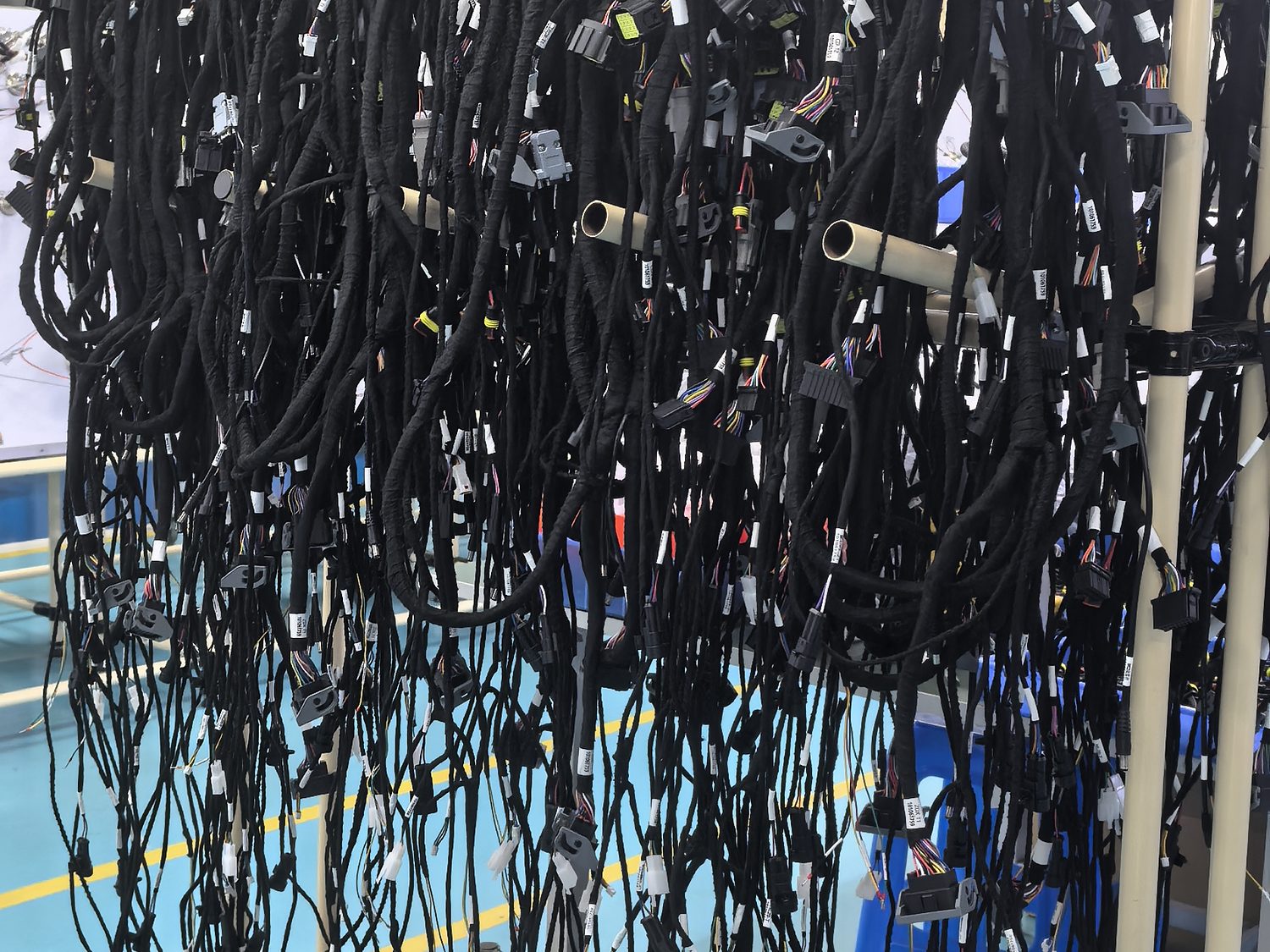
- An automotive wiring harness for a production vehicle programme: IATF 16949 is effectively mandatory, and the scope has to cover harness manufacturing at the site that will run your part. Engine, chassis and cabin harnesses are drawing-driven, so the design exclusion is normally harmless.
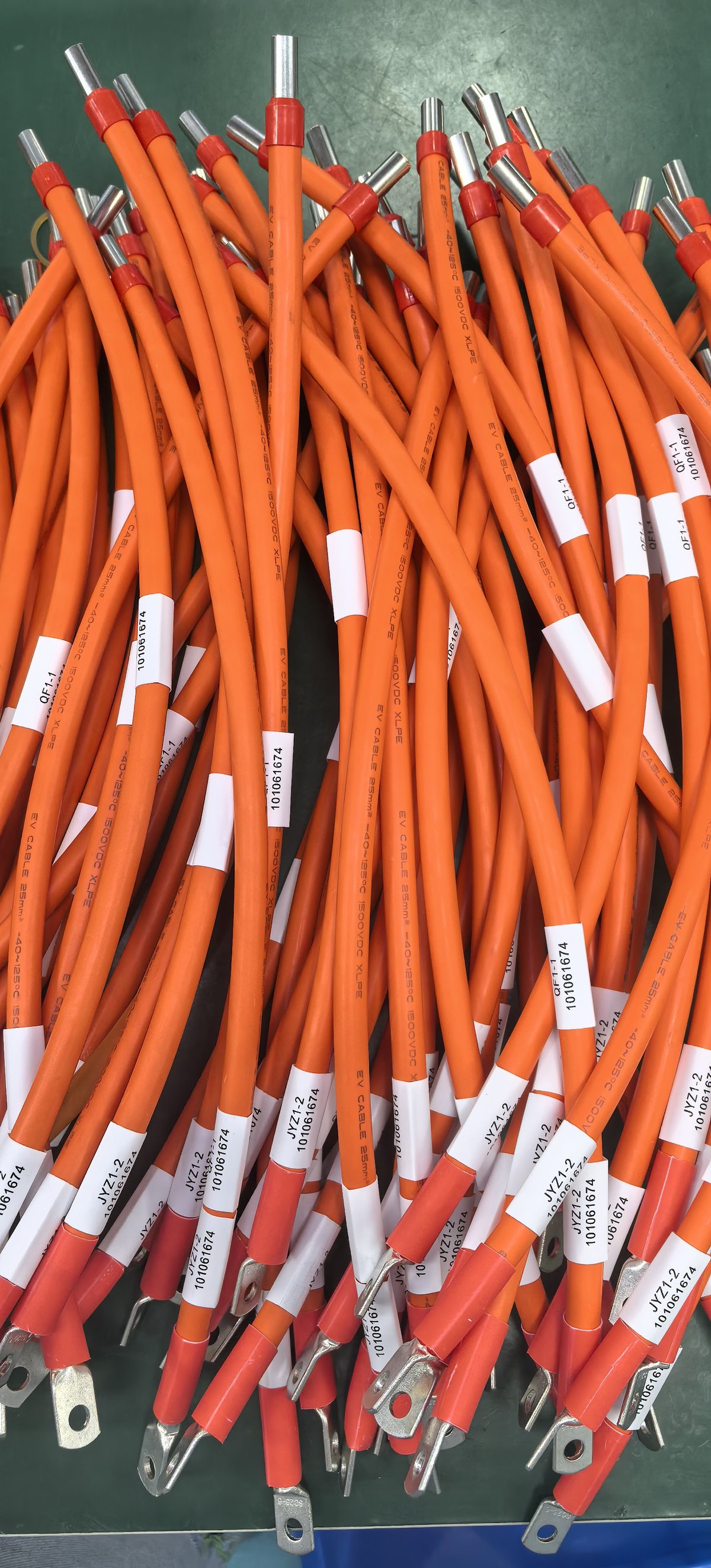
- An EV or energy-storage cable assembly: the customer usually specifies the electrical requirement rather than the construction, which means someone is making design decisions. If the supplier's scope excludes design, that someone is you — and that has to be a conscious choice, not an oversight.
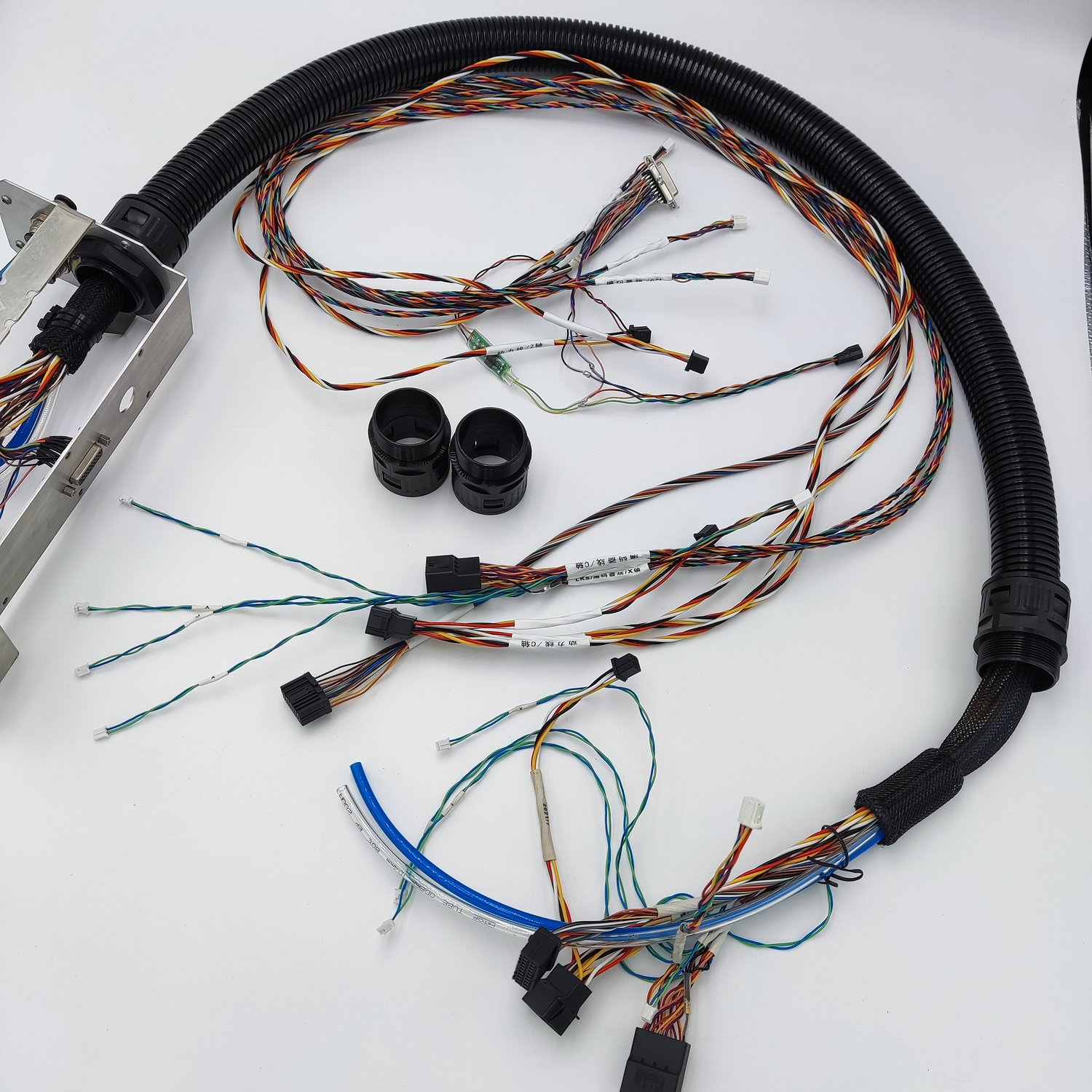
- A construction machinery or industrial automation harness: the end product may not be an automotive production part, so IATF is not always contractually required. Ask anyway. A supplier who holds it for automotive work and runs your off-highway programme on the same lines is bringing the automotive discipline with it at no extra cost.
- A home appliance harness: the appliance maker's own quality requirement usually governs, and ISO 9001 is often the contractual bar. The IATF controls are still the better answer where the volumes are high and an escape is expensive.
Frequently asked questions
Can a supplier be IATF 16949 certified without ISO 9001?
No. IATF 16949 is a supplement to ISO 9001:2015 rather than a standalone standard, so certification to it means the quality management system already satisfies ISO 9001. A supplier who presents the two as a choice — "we are certified to ISO 9001, which is equivalent" — is describing a general quality system, not an automotive one. For an automotive production part that is a real difference, because IATF adds the control-plan, PPAP, change-notification and contingency requirements on top.
How do I verify that an IATF 16949 certificate is genuine?
IATF certificates are held in a public database maintained by the scheme's oversight body, searchable by certificate number and by company or site. Check three things: that the number resolves to a live record, that the manufacturing site address on the record is the plant you are buying from, and that the status is active rather than withdrawn, suspended or expired. Also read the scope sentence on the record itself — it is the same sentence that appears on the wall certificate, and it is the one that tells you whether the certified activity covers what you are buying.
Does the certificate scope have to include design if we want the supplier to propose the construction?
If you are asking the supplier to choose the construction — the conductor, the shielding, the jacket, the termination — then you are buying a design activity, and the supplier's certified scope should include design or you should both accept in writing that it does not. Many programmes work perfectly well with a manufacturer-only scope, because a build-to-print relationship is exactly what that scope describes. The failure mode is the unexamined middle: a specification loose enough that the supplier is de facto designing the part, inside a scope that explicitly excludes design responsibility.

 Guides & Insights · Sep 24, 2026