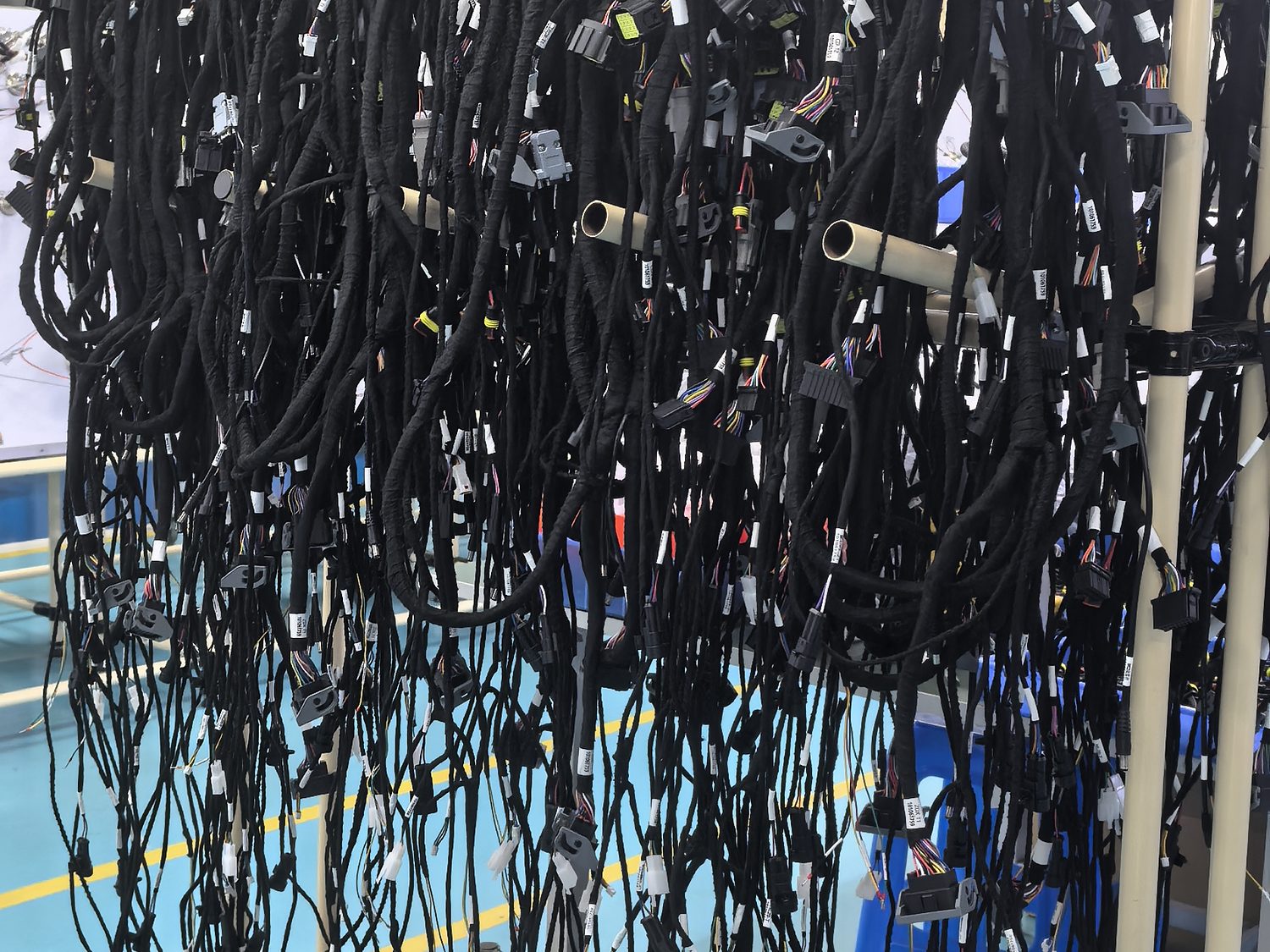
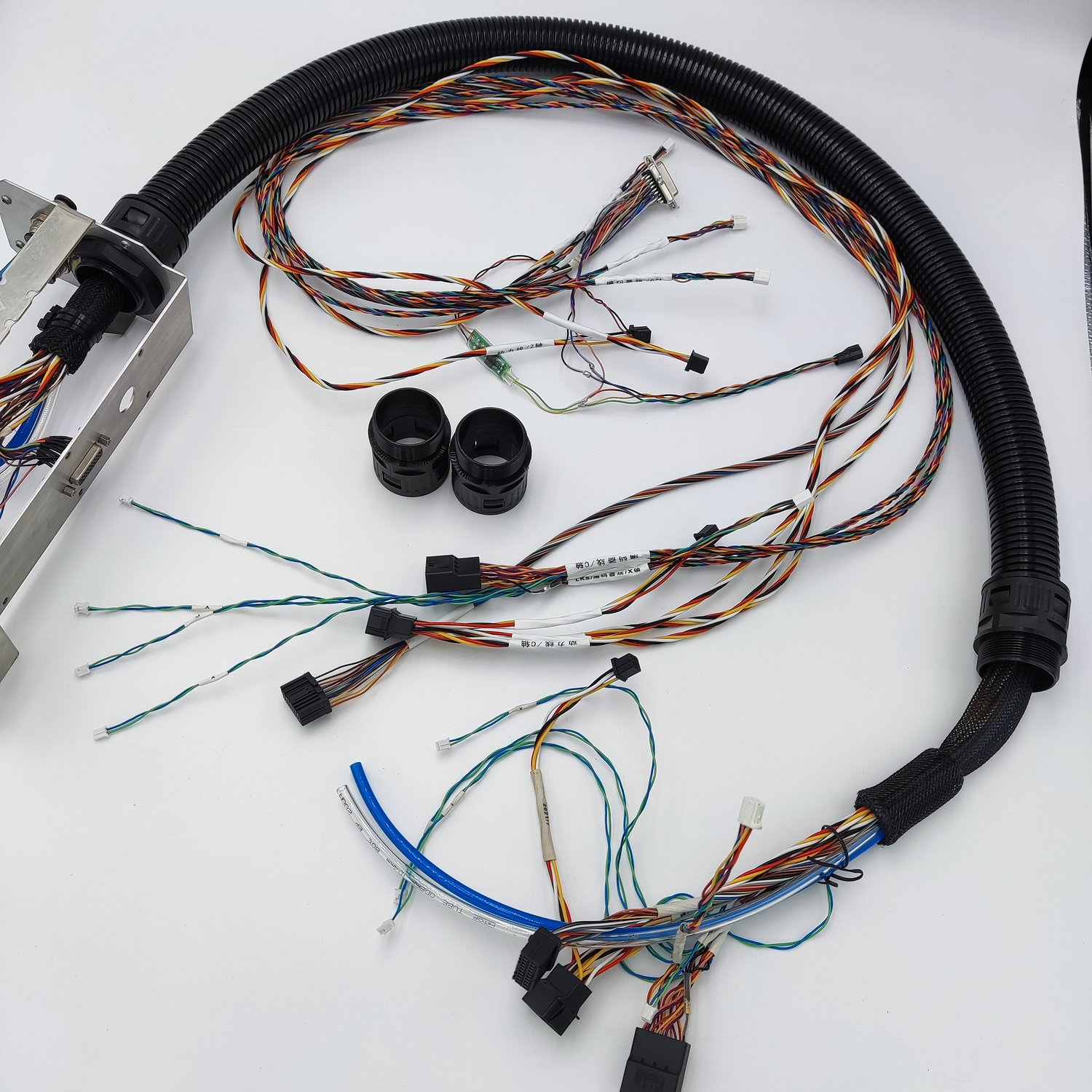
Battery pack harnesses go wrong in sourcing for one reason more often than any other: the RFQ is written like a harness RFQ. A conventional harness can be bought from a drawing, and the drawing settles almost everything. A pack harness is bought as a performance requirement — the customer states the voltage, the current, the temperature range, the shielding and the environment, and the construction is the supplier's to propose. If the RFQ carries a drawing and nothing else, the supplier fills the gaps with assumptions, and the assumptions are where the cost and the schedule risk sit.
This is what to put in the RFQ, what the supplier should have to prove, and where the calendar actually goes between enquiry and production.
The specification items that must be fixed before quoting
The two rows buyers most often leave blank are the bend radius and the temperature definition. Both are cheap to state and expensive to discover later — the first because a harness that does not dress into the channel is scrap, and the second because a 125 ℃ requirement measured at the conductor is a different material from one measured at ambient.
Route it through the right product family before you quote it
The same physical cable can be three different products depending on where it sits in the vehicle or the rack, and buying the wrong one costs a requalification:
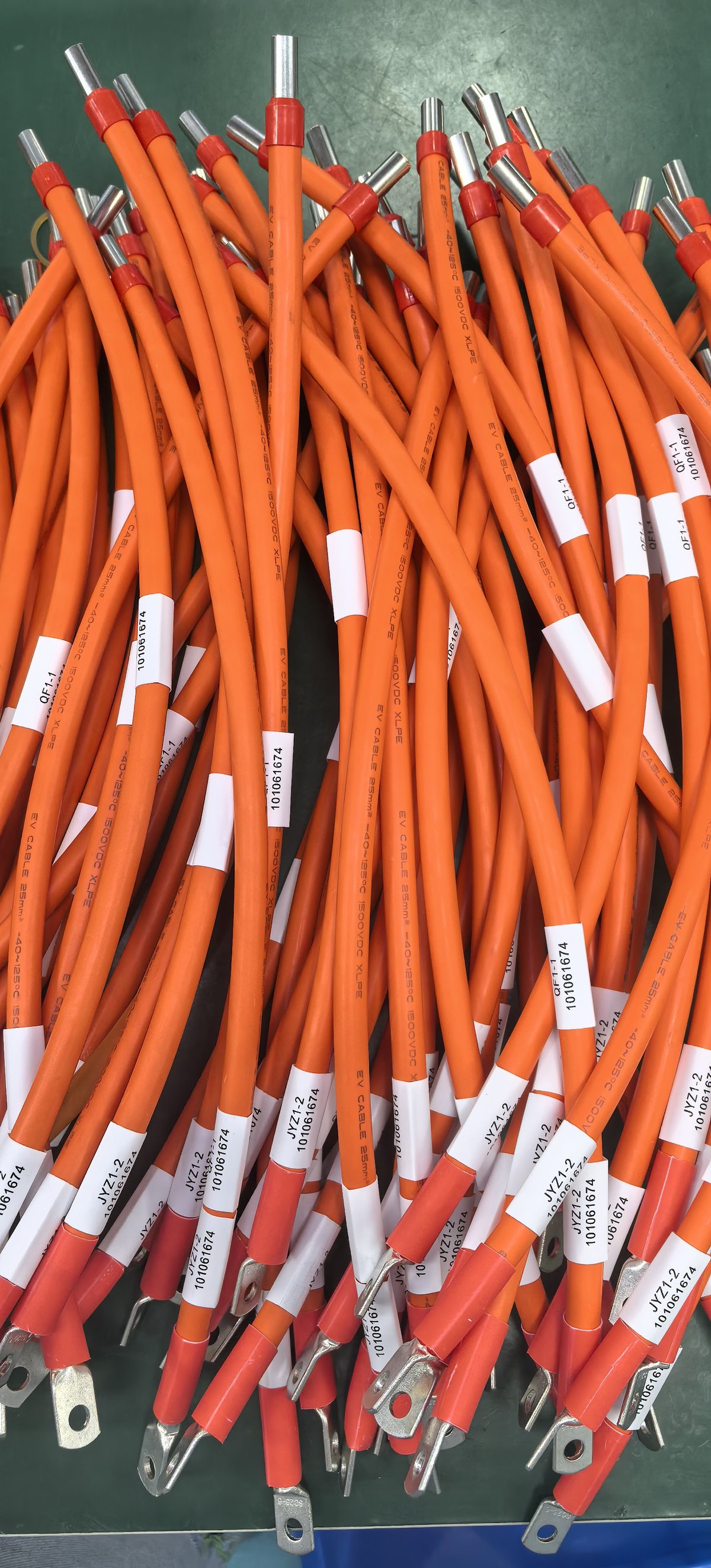
- Inside the pack. The interconnect between modules, the BMS sense harness and the pack-to-disconnect run. This is the EV and energy-storage high-voltage cable assembly family on this site — the customer states the electrical requirement and the construction is proposed.
- From the pack to the vehicle. A routed, drawing-driven assembly that usually carries the connector interface at both ends and often a bracket. It is often better bought alongside the automotive harness, because the same drawing discipline and the same crimp verification apply.
- In a stationary rack. An energy-storage string is not exposed to the same vibration as a road vehicle but has a longer service life expectation and a different maintenance profile. A supplier that can hold both the EV and the industrial automation discipline is the one to use when a project spans both.
Certifications: which questions have answers and which do not
Ask for the quality management certificate and read the scope, not the title. Our manufacturing runs under IATF 16949:2016 (certificate 0597346) and ISO 9001:2015 (registration CACQ22Q00816R1), and the IATF scope covers manufacturing of wire harness while excluding product design under Clause 8.3 — which matters here more than on a conventional harness, because on a pack assembly the supplier is often the one proposing the construction.
Beyond the management system, workmanship and product compliance are governed by whatever standard your programme mandates. Ask the supplier to state plainly which workmanship standard they build to, rather than to list every mark they have ever been asked about. A supplier who responds with a long list of marks they do not currently hold is telling you they answered the question they wished you had asked.
What you should be able to get as evidence, in any case:
- A first-article report with dimensional and electrical results, not a certificate of conformance
- The test regime that was applied, named specifically, with limits
- For a sealed assembly, the leak or ingress test result and the method used
- For a shielded assembly, the continuity of the shield to the designated pin, measured
Where the calendar actually goes
Sampling and mass production are quoted per project rather than as a fixed number, because the connector lead time is outside anyone's control and a firm promise on it would be a guess. What a supplier should give you instead is the two figures separately — sample and production — with the connector procurement named as the item that can move.
Running the audit without flying out
A pack harness programme is usually awarded after some form of supplier verification, and that can be done remotely if it is structured. Four things to ask for, in this order:
- A live video walk of the line that will run your part — not a promotional film. Ask the camera to stop at the crimp stations and the test station, and ask how many machines are visible.
- A pull-off force measurement, performed on camera. Not the result — the act of measuring it, on a machine with a calibration label whose date you can read.
- The control plan for the closest part they already build, with the characteristic, the method, the sample size and the reaction plan all filled in.
- The test data from a recent lot of that comparable part, so you can see what 100% test actually produces rather than what it is claimed to produce.
If a supplier cannot do all four, the question is not whether they are hiding something — it is whether the information exists in a retrievable form at all, which is itself the answer.
Frequently asked questions
Can I buy an EV battery pack harness from a drawing rather than a specification?
You can, and it is often the right choice for the assembly that runs from the pack to the rest of the vehicle, where the routing and the connector positions are fixed. Inside the pack it is usually the wrong instrument, because a drawing that fixes the construction also fixes the responsibility for it — if the harness later fails a temperature or shielding requirement, the drawing is where the discussion starts and ends. A performance requirement lets the supplier propose a construction and own the outcome, which is what you are paying for on a high-voltage part.
What lead time should I plan for on a first battery pack harness order?
Plan the sampling stage at five to ten days and mass production at two to four weeks, and then add the connector procurement time on top rather than assuming it is included. The connector is the item that most often moves the date, and it moves for both sides — a long-lead automotive-grade housing ordered in week one is a two-week delay that no amount of production efficiency recovers. Ask specifically whether the connector in your design is a stocked part or a lead-time item, and get the answer in writing before the PO.
How do I verify the workmanship standard a supplier actually builds to?
Ask for the standard by name and then ask for the evidence that refers to it: a first-article report whose acceptance criteria cite the specification, a work instruction on the line that quotes the limit, and a test record with the limits applied. A supplier building to a named standard can produce all three without preparation. Ask also how deviations are handled — on a drawing-driven part they are quoted as a separate line, and the same discipline should apply to a performance specification, where a proposed alternative should come with the reasoning attached rather than appearing in the finished part.

 Guides & Insights · Sep 24, 2026