Most supplier selection goes wrong in the same place: the evaluation is built around price, delivery and sample quality, and none of those three predict what happens on shipment ten. A harness is a low-margin, high-labour part, and the way it fails is not that a supplier cannot build one — it is that they cannot build the same one, twice, six months apart, with the same operator turnover and the same pressure on cycle time.
These nine checks are the ones that predict repetition. Each can be run in a sourcing conversation or a half-day audit, and each has a specific answer you can verify rather than an adjective you have to believe.
Why comparing three quotations does not work
Send the same harness drawing to five suppliers and the spread is routinely 30% to 50%. Almost none of that spread is margin. It is differences in what the supplier assumed:
- Whether the terminals are the specified brand or an equivalent from a second source
- Whether the sample is built by the engineering team — the best crimper in the building — or on the line that will run production
- Whether the quoted test is continuity only or continuity plus a hipot and a resistance limit
- Whether the 5% of circuits that are awkward are quoted at the same rate as the 95% that are easy
- Whether the annual volume is treated as firm or as a forecast, and how much of the tooling is amortised into the unit price
None of these are visible on a quotation form. They surface as a price that looked competitive at the PO stage and a part that does not match the drawing at the incoming-inspection stage.
The 9-point checklist
The three checks that disqualify fastest
If a supplier has to be dropped early, it is almost always on one of these:
- No pull-off force measurement after setup. Crimp height drifts as a machine warms and as terminals come from a new reel. A supplier who measured once at setup has no data on either.
- Sampling instead of 100% electrical test. The failures this misses — a terminal pushed back in its housing, a wire in the wrong cavity — are the ones that stop an OEM line, not the ones that annoy a quality engineer.
- Vague answers to capacity questions. "We can handle your volume" is not an answer to "how many assembly lines do you have". If the first question about capacity produces a sentence instead of a number, the supplier is either small or subcontracting.
What a good first reply looks like
Send a drawing and a target volume, and read the reply. A supplier who can actually build the part will usually come back with three things: a question about something the drawing does not state, a note on which circuits drive the cost, and a lead time that separates sample from production. A reply that only contains a price and a delivery date has told you the supplier quoted the drawing as though it were complete — which means the surprises are now yours.
The question about the drawing is the most valuable part. It means the drawing was read by someone who intends to build it.
Applying the checklist to the family you are buying
The nine checks do not weigh the same in every family. A few examples of where the emphasis shifts:
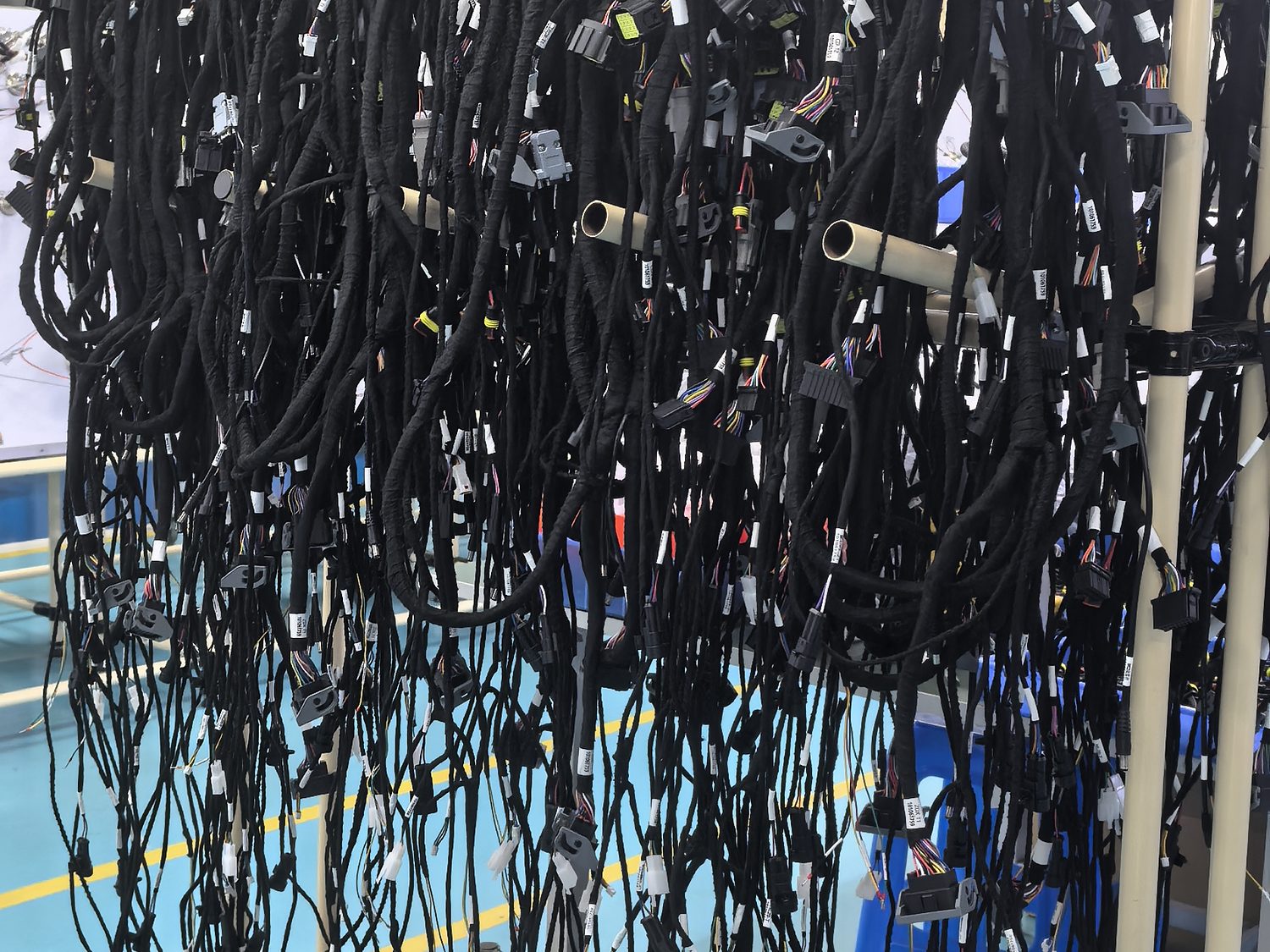
- On an automotive wiring harness, checks 3 and 4 carry the most weight. Engine, chassis and cabin harnesses are drawing-driven and crimp-heavy, so crimp verification and full electrical test are what stand between you and a warranty claim.
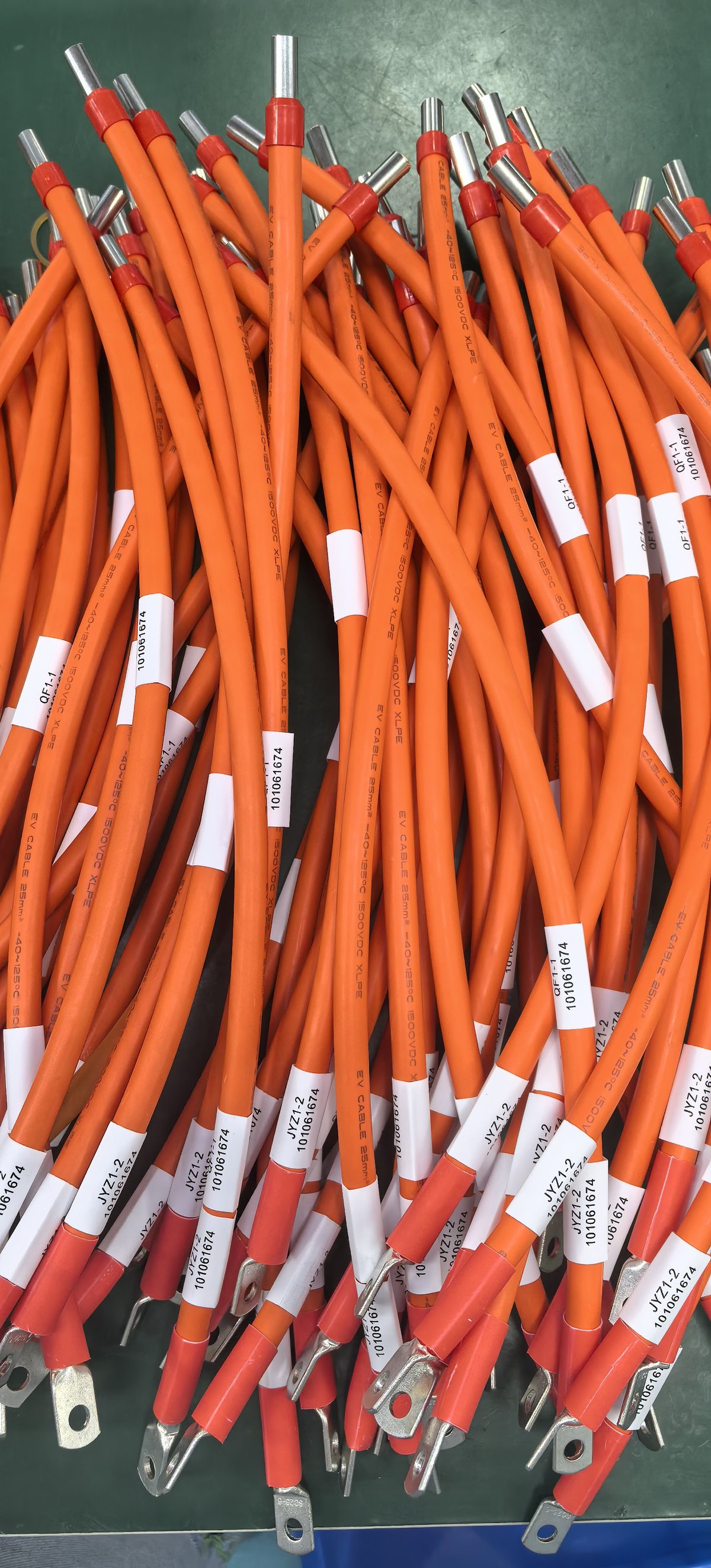
- On an EV or energy-storage high-voltage cable assembly, the weight moves to checks 1 and 6. The customer states the electrical requirement instead of the construction, so the supplier is making design decisions — and you need to know whether that responsibility sits inside their certified scope.
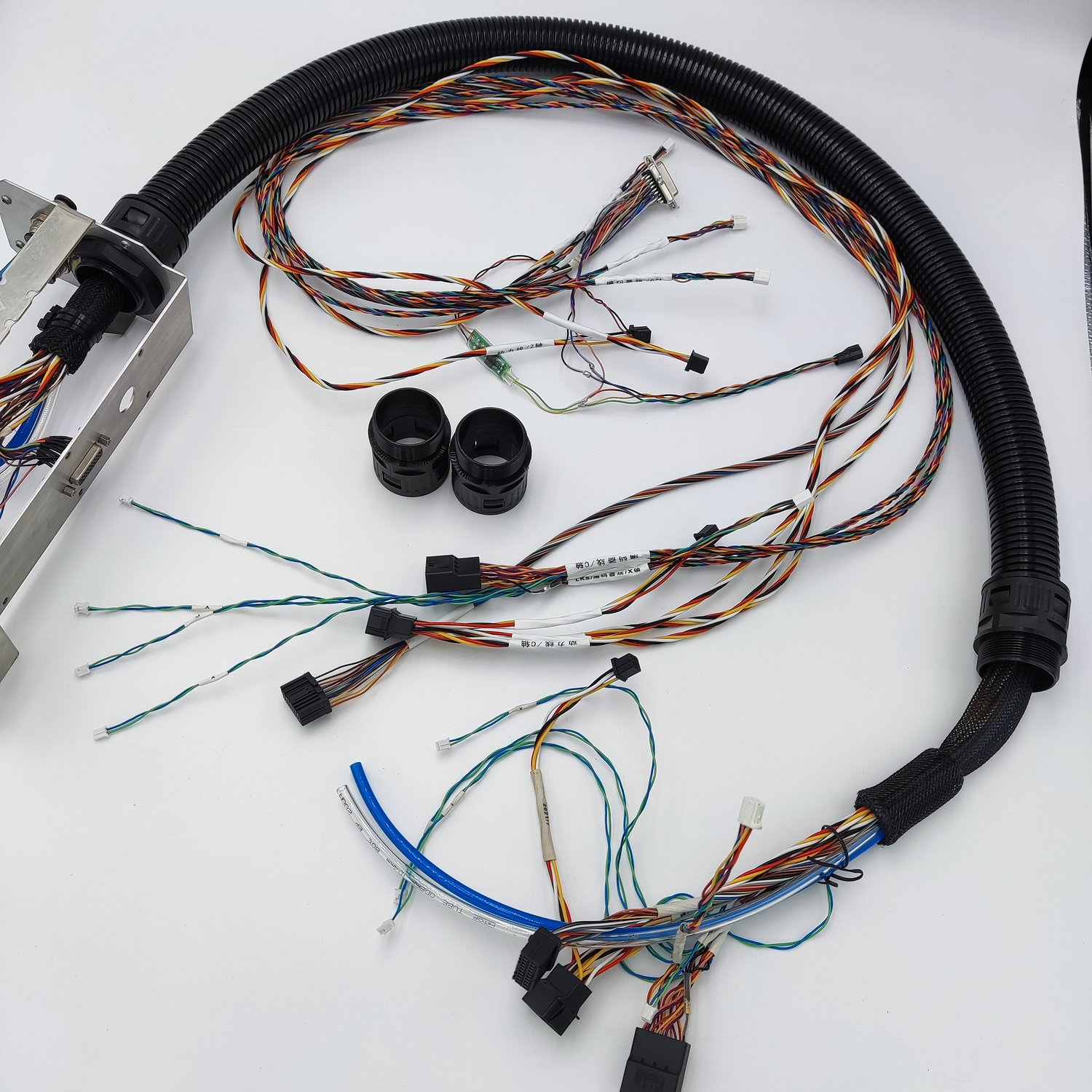
- On a industrial automation harness, check 8 matters most. A robot or drag-chain cable is sold on cycle count, so the supplier needs flex and swing test data, not a routing diagram.
- On a home appliance harness, checks 2 and 7 usually decide it. Volumes are high, unit prices are low, and the supplier who outsources cutting loses the tolerance stack on the part where tolerance is nearly all you are buying.
How we answer these nine
For the record, and so the checklist is not a one-sided document:
Frequently asked questions
How many suppliers should I quote a new harness programme with?
Three is enough, and they should be evaluated against the same checklist rather than against each other on price alone. A fourth quotation adds almost no information, because the spread between quotes is driven by different assumptions about the specification rather than by different levels of efficiency. If two of the three come back within 10% of each other and the third is 40% lower, the third has read the drawing differently — find out how before treating it as the best price.
Does an IATF 16949 certificate mean the supplier can design my harness?
Not necessarily. IATF 16949 certificates carry an explicit scope, and a manufacturer-only scope excludes product design under Clause 8.3. A supplier certified to that scope can be entirely competent at building your harness, but the design responsibility — the lengths, the routing, the fault-current assumptions — stays with whoever drew it. Ask for the certificate and read the scope sentence rather than the certificate title, because both kinds of supplier will answer "yes" to the question.
What defect rate should I expect from a wire harness manufacturer?
Ask for three separate numbers, because a single blended figure hides where the problem is: process pass rate, outgoing lot pass rate and assembly defect rate. On this site they are ≥98%, ≥99% and ≤60 PPM respectively, with on-time delivery at 100%. The one to look at hardest is the assembly defect rate in PPM, since that is measured after 100% electrical test — a supplier quoting a PPM figure that is lower than their test escape rate is quoting a number they do not measure.


 Guides & Insights · Sep 23, 2026