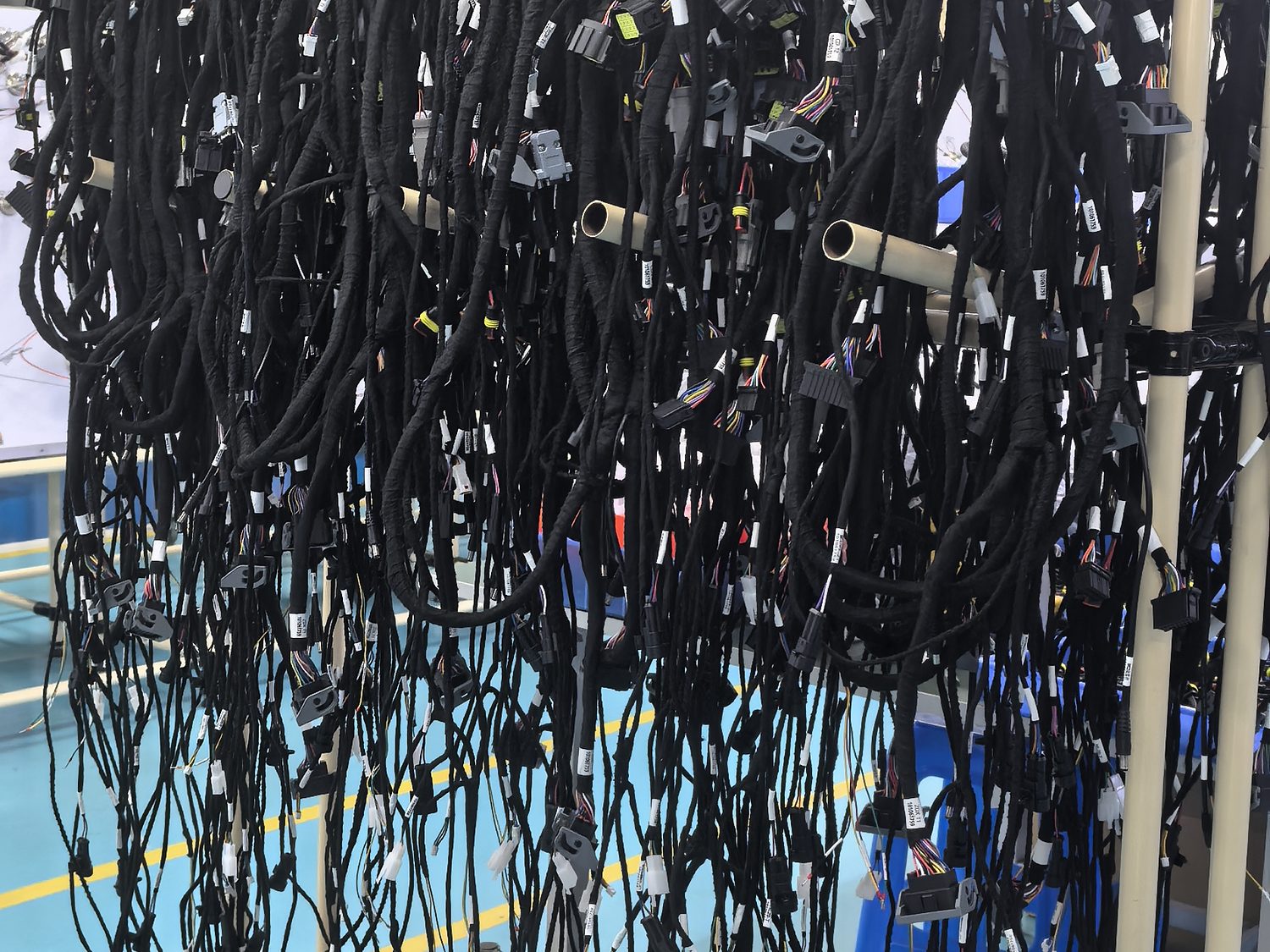
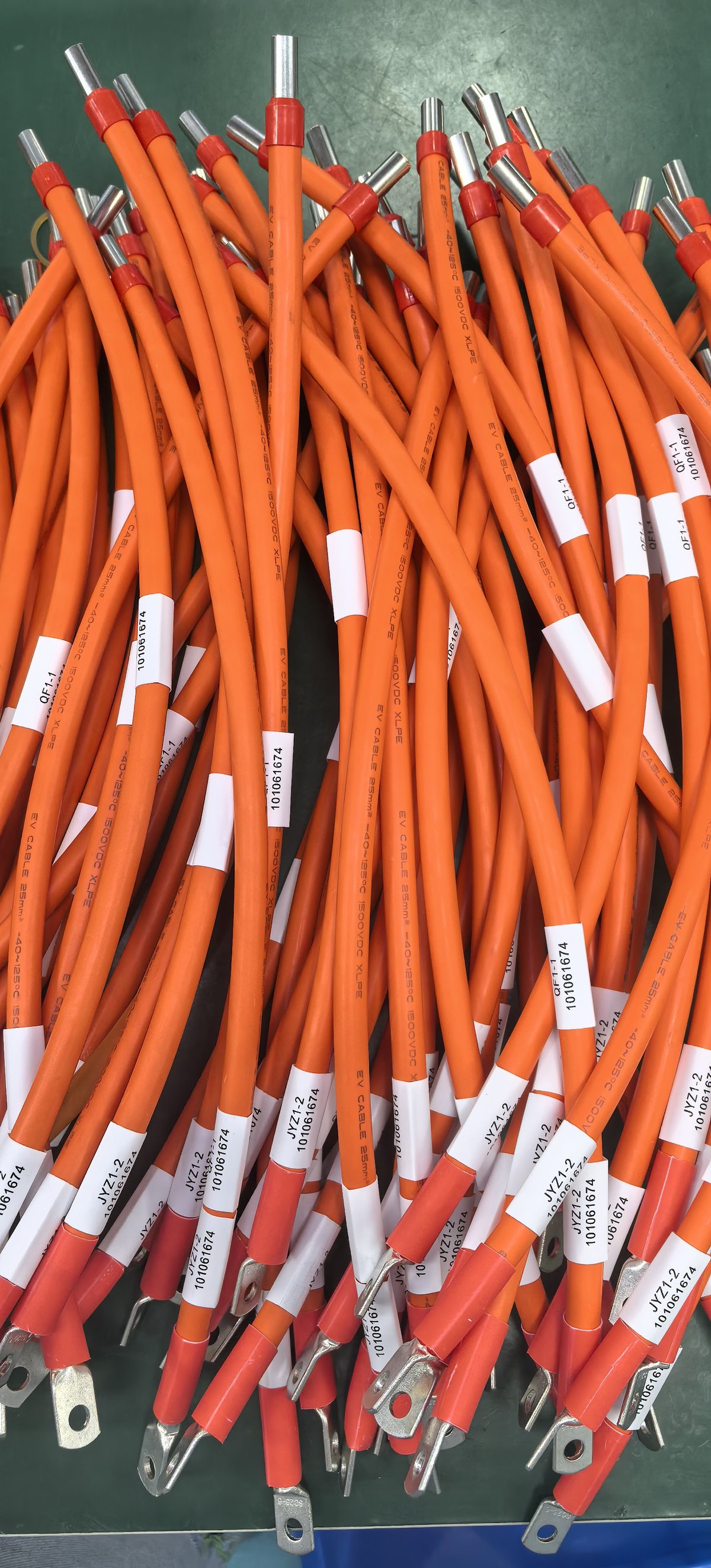
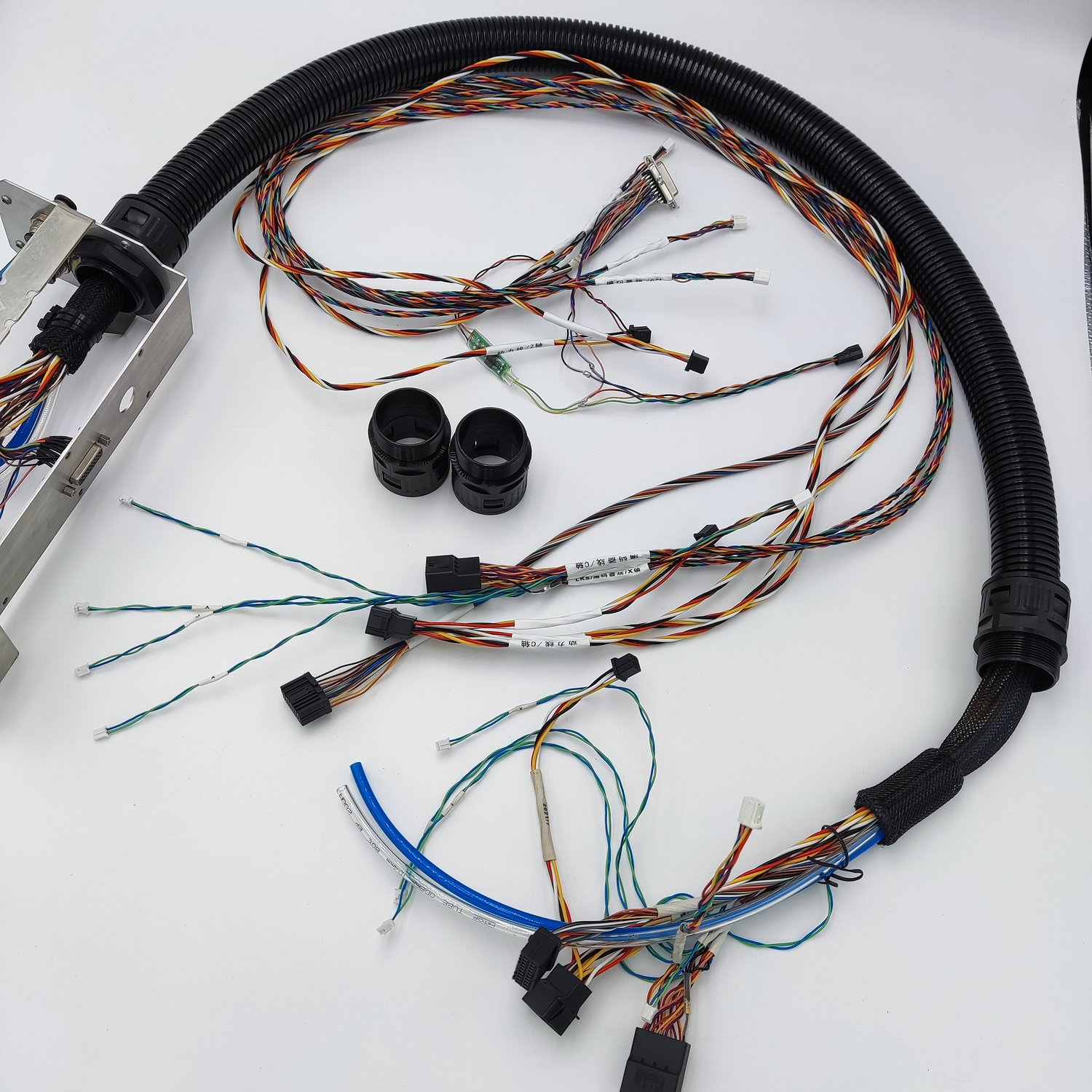
A wiring harness — also written wire harness, and shortened to harness — is an assembly of conductors, terminations and protective components bundled into a single unit and built to a defined layout, so that power and signals can be distributed through a machine or a vehicle as one part rather than as hundreds of individual wires. The purpose is repetition: a harness lets a complex electrical system be designed once and installed identically many thousands of times.
What a harness is made of
Why it is a whole product, not a bundle of wires
The distinguishing feature of a harness is that it is built to a layout, and the layout is what carries the engineering. Two harnesses with identical wire lists can be entirely different parts because of the branch lengths, the bend radii, the protection by zone and the fixing points. That is also why the harness is where most electrical faults in the field originate: the conductors and connectors are usually reliable, and the failures come from chafing, water ingress, a branch that is too short, or a crimp that was never verified.
Because of that, a harness is inspected for the things a loose wire cannot be inspected for — crimp height and pull-off force, continuity across every circuit, shield continuity where there is shielding, and dimensional conformance to the drawing. If you are buying one, the four checks are what the selection checklist covers.
Where harnesses are used
The same discipline serves very different environments, and the requirements diverge more than the parts look. The six families on this site map to the six that come up most often in sourcing:
- Automotive wiring harness — engine, chassis, cabin. Drawing-driven, crimp-heavy, and governed by crimp verification and full electrical test.
- EV and energy-storage high-voltage cable assembly — battery pack, PDU, stationary storage. Bought as a performance requirement, with shielding and sealing as the critical properties.
- Electric two-wheeler harness — e-motorcycle, e-bike, powersports. High-vibration, weather-exposed, and usually volume-driven.
- Home appliance harness — white goods and small appliances. Very high volume, low unit price, where the tolerance stack and the stability of the programme decide the result.
- Construction machinery harness — excavators and off-highway equipment. Wash-down, wide temperature, field-serviceable.
- Industrial automation harness — robotics, control cabinets, servo and drag-chain cable, specified by cycle life.
What is not a harness
- A cable assembly is usually built to a performance requirement rather than a drawing, and the supplier typically chooses the construction. The distinction is set out in wire harness vs cable assembly.
- A ribbon or flat-flex cable is a single formed conductor carrier rather than a bundle of terminated wires.
- A cable loom or loom kit is sometimes used to mean a harness and sometimes to mean a partial assembly of the protection components only. Ask which, because the two are quoted very differently.
Frequently asked questions
What is the difference between "wire harness" and "wiring harness"?
Nothing mechanical — they are two spellings of the same thing, and both are in common use in English-language procurement. "Wiring harness" is slightly more common in North American automotive writing and "wire harness" in the supplier directories, and a search will return both for the same product. When you specify one, use the term your drawing set already uses so that the drawings, the BOM and the purchase order all refer to the part the same way.
What is a harness measured and tested for?
Four categories. Dimensional conformance against the drawing, which covers lengths, branch positions and the datum every branch is measured from. Crimp quality, which is crimp height and terminal pull-off force, usually with terminal cross-sections cut and analysed on a schedule. Electrical integrity, which on most production harnesses means continuity across every circuit at 100% rather than by sampling, plus hipot and resistance limits where the drawing calls for them. And where the part is sealed or shielded, the specific property that makes it work — ingress protection for a sealed assembly, shield continuity for a shielded one.
How many circuits does a wiring harness usually have?
There is no useful typical figure, because the range is enormous — a single circuit for a sensor lead, and several hundred for a full engine and cabin harness. What matters commercially is not the circuit count but the ratio of difficult circuits to easy ones, since the awkward minority carries most of the labour and most of the quality risk. That ratio is the reason two suppliers can quote the same circuit count 40% apart, which is worth understanding before you treat the difference as a price negotiation.

 Guides & Insights · Sep 24, 2026