Buyers use the two terms interchangeably, and for most of a sourcing conversation it makes no difference. It starts to matter when two suppliers quote the same project and the numbers sit 40% apart — at that point they were not quoting the same thing.
The distinction in one line
A wire harness is manufactured to a drawing. A cable assembly is manufactured to a performance requirement. Everything else follows from that.
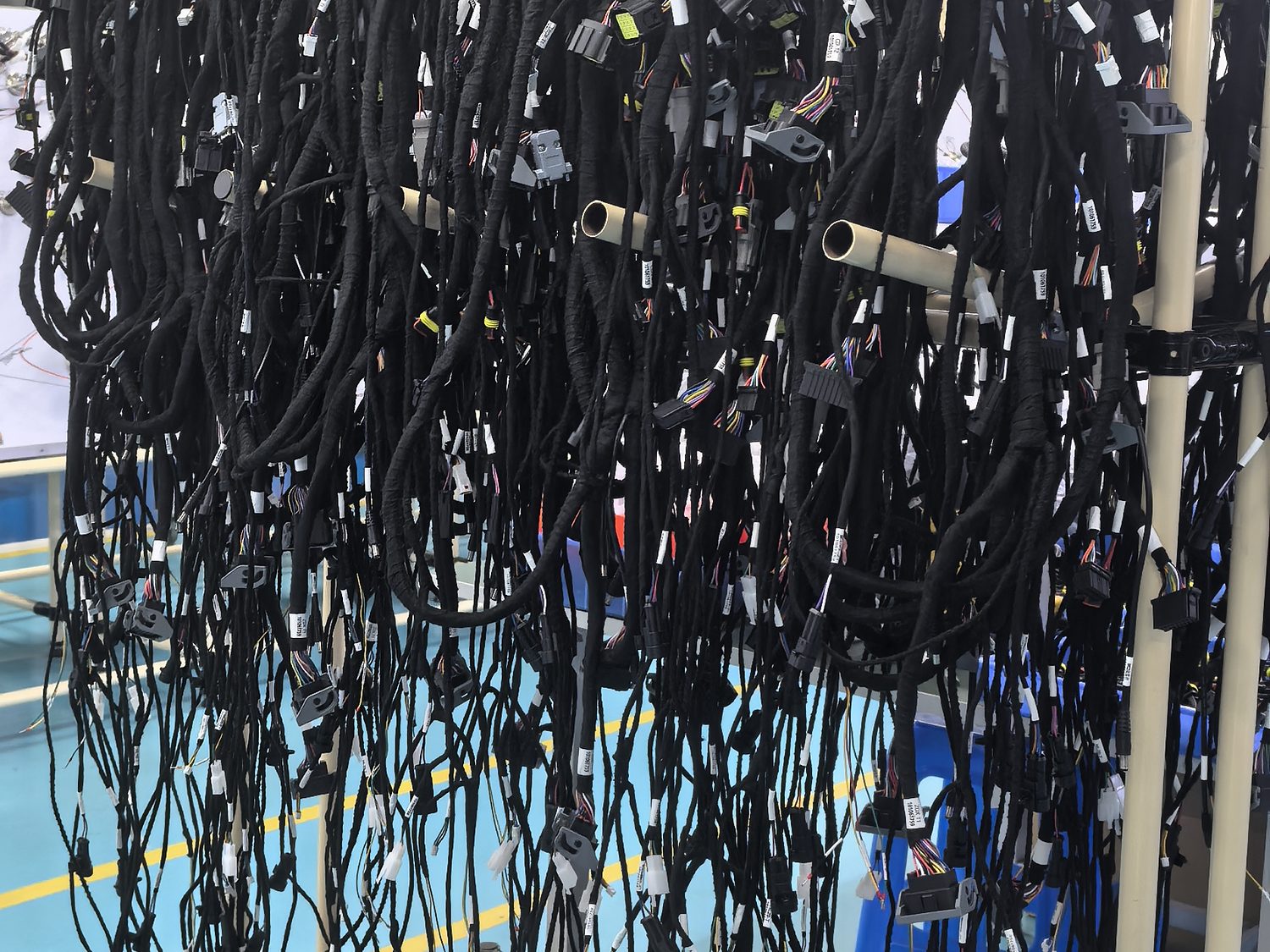
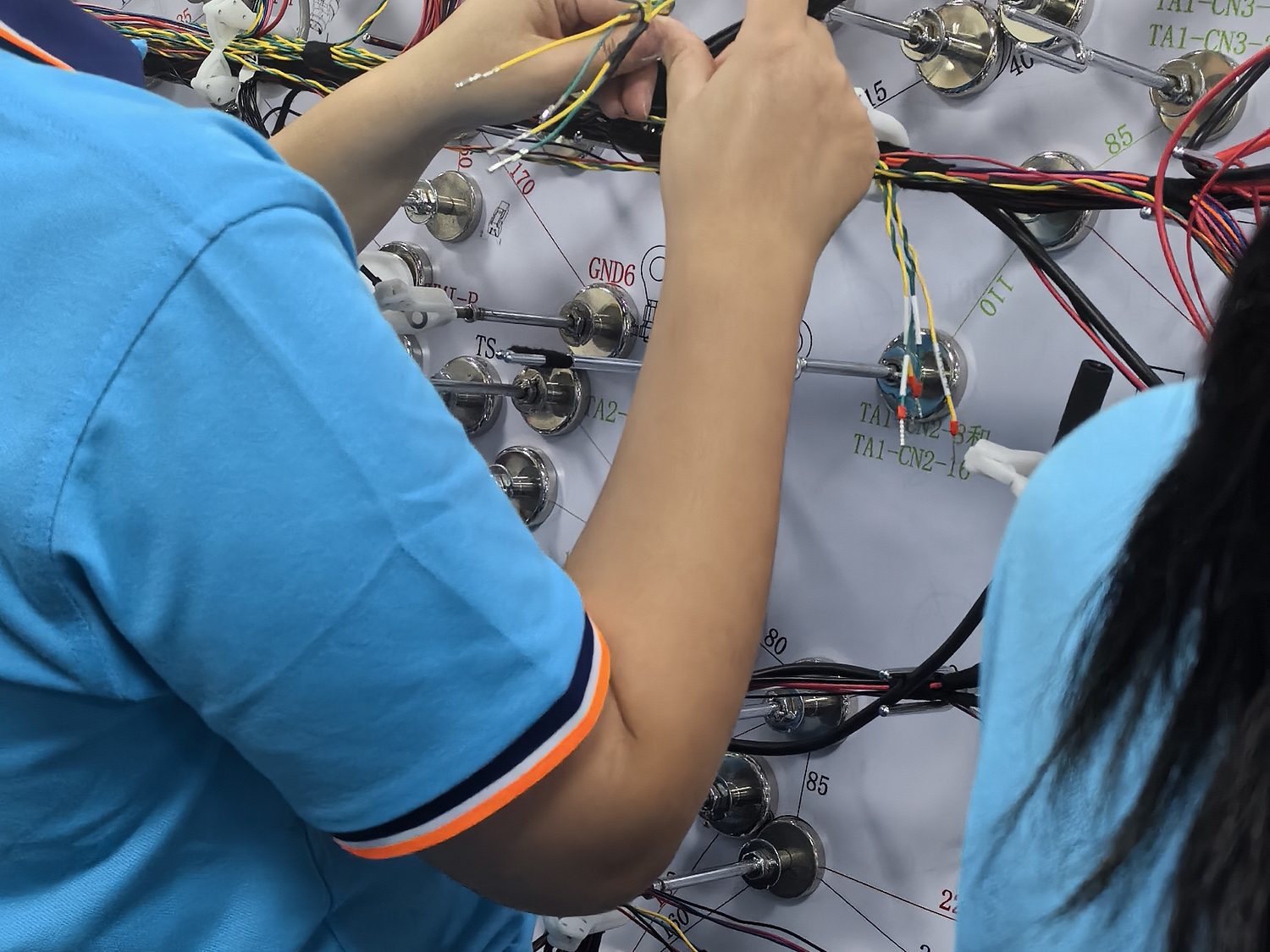
With a harness, the lengths, breakouts, connector positions, taping and looming are defined by the customer's print, and the supplier's job is to reproduce it. With an assembly, the requirement is what the cable has to do — carry a signal or a current through a defined environment — and the construction is usually the supplier's to choose.
Where the difference shows up
Why quotes stop being comparable
Ask five suppliers to quote an assembly described only as "a 3-metre shielded cable, 12 conductors" and you will get five different parts. One will use tinned copper braid, another aluminised foil, a third both. One will overmould the connector, another will not. The invoice line reads the same in every case; the part does not.
That is not a pricing problem, and negotiating harder will not fix it. It is an RFQ problem, and it is settled in the specification.
How to tell which one you have
- If you can hand a supplier a drawing and expect an identical part back, it is a harness.
- If what matters is that the part survives an environment — vibration, heat, EMI, flex cycles — and you would accept a different construction that meets it, it is an assembly.
- If you have both a drawing and a performance requirement, you have a harness, and the performance requirement belongs in the drawing notes rather than in a separate document nobody opens.
What to put in the RFQ
For a harness, the drawing does most of the work. These six items are the ones that most often go missing, and each of them changes the price:
- Wire gauge and insulation material, listed by circuit where it varies
- Connector part numbers, with housing, terminal and seal as separate lines
- Branch lengths measured from a stated datum, not from a connector face
- Protection: conduit, braid or tape type, and the wrap direction
- Test requirement — continuity only, or continuity plus hipot and resistance limits
- Annual volume, and whether it is firm or a forecast
For an assembly, the specification has to carry what the drawing would otherwise have carried:
- The electrical requirement across the operating temperature range, not only at room temperature
- The environment: temperature, flex radius and cycle count, exposure to fluid or salt spray
- Termination at both ends, including whether the overmould or boot is part of the assembly or a separate item
- The qualification evidence you will accept — a first-article report, a test plan, or both
Where this lands in the catalogue
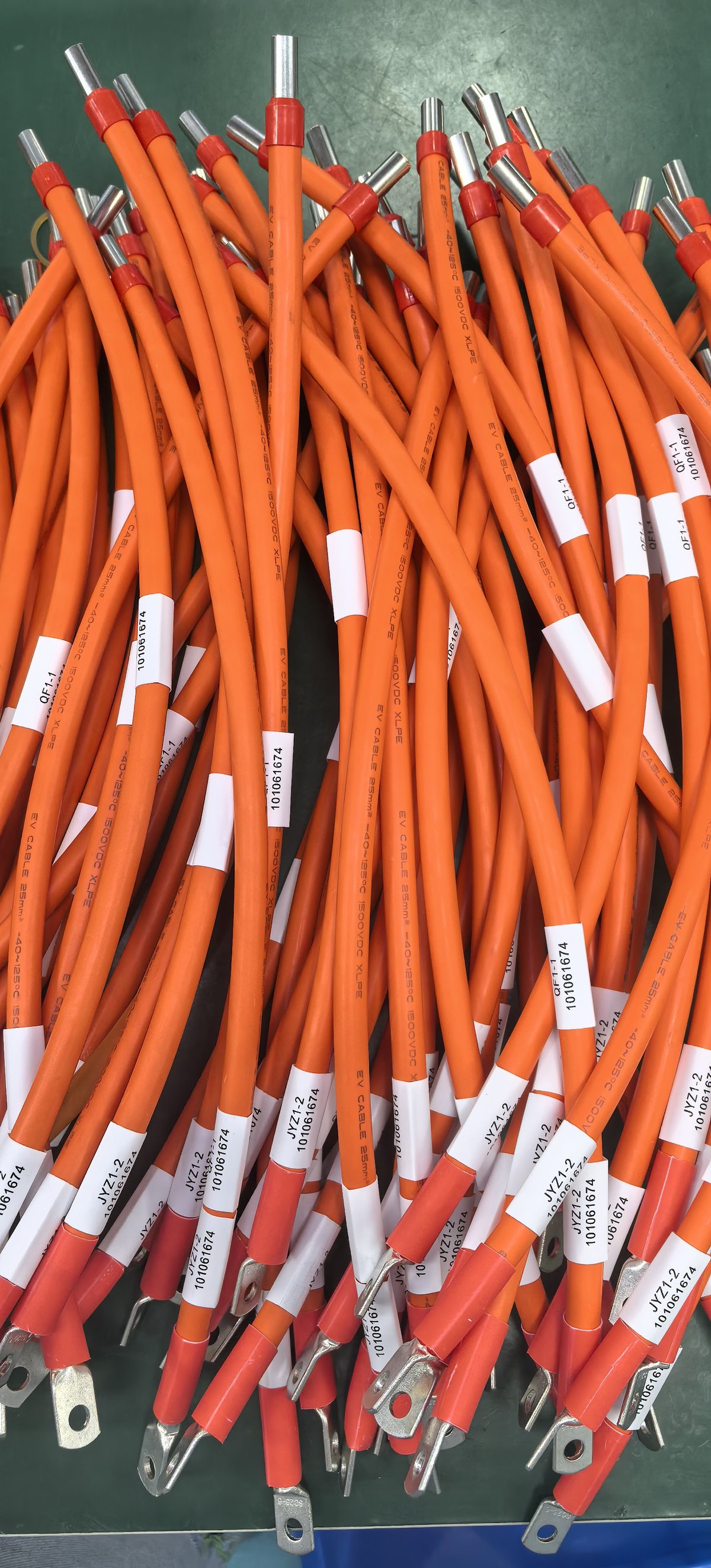
The distinction runs straight through our product families. An automotive wiring harness is almost always the drawing-driven kind — engine, chassis and cabin harnesses are built to the customer's print. An EV and energy-storage high-voltage cable assembly is usually the other kind: the customer states the voltage, current, temperature range and shielding requirement, and the construction is ours to propose. Home appliance harnesses sit in between — the appliance maker fixes the connector and the routing, while the insulation and terminal plating are often left open.
If you are not sure which side your project is on, send whatever you have. A drawing, a sample, or a paragraph describing the environment is enough to tell.
How both are quoted here
Linkssor builds to drawing and to sample. For a harness programme you send the drawing and we quote against it, with any deviation listed separately instead of buried in a note. For an assembly programme we return a construction proposal with the reasoning attached, so you can see what is driving the cost before you commit to tooling.
Either way the first article arrives with a dimensional and electrical report, and production runs carry the lot-level test data the drawing or spec calls for.
Frequently asked questions
Can one supplier build both a wire harness and a cable assembly?
Usually yes, and it is the better arrangement, because the two share the same crimping, sealing and testing equipment. A supplier who understands both will also tell you which one your project actually is — a drawing-driven part quoted as an assembly is where buyers lose money. Both are built on the same eight lines here, so the answer to "which do I need" comes from the same engineering team that would build it.
Which is more expensive, a wire harness or a cable assembly?
Neither, as a category — cost follows the specification and not the label. An assembly with a shielded construction, sealed connectors and a hipot requirement costs more than a simple harness of the same circuit count, and a complex engine harness costs more than a short assembly. What does differ is quote comparability: the harness is built to your drawing, so every supplier quotes the same part, while the assembly leaves the construction open and the quotes describe different parts unless the specification is tight.
My drawing is incomplete. Which one should I buy?
If what you have is a partial drawing plus a performance requirement, buy it as an assembly and let the supplier propose the construction — the gaps then get filled explicitly, in a document you can review before the award. Buying it as a harness with an incomplete drawing pushes the same gaps into the supplier's assumptions, where they surface after the award instead. The practical test is whether you could hand the drawing to a supplier and expect an identical part back: if you could not, it is not yet a harness programme.

 Guides & Insights · Sep 24, 2026