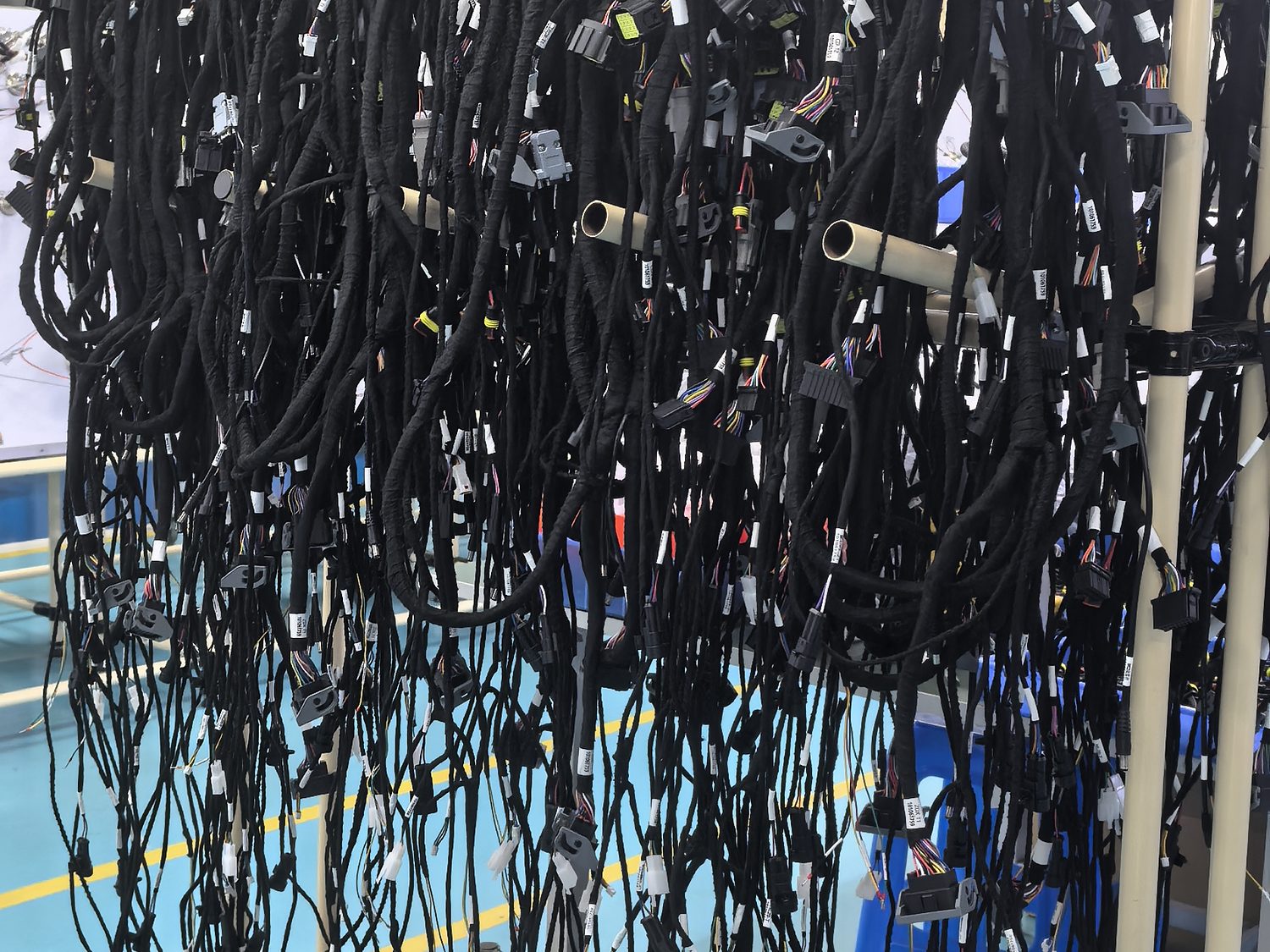
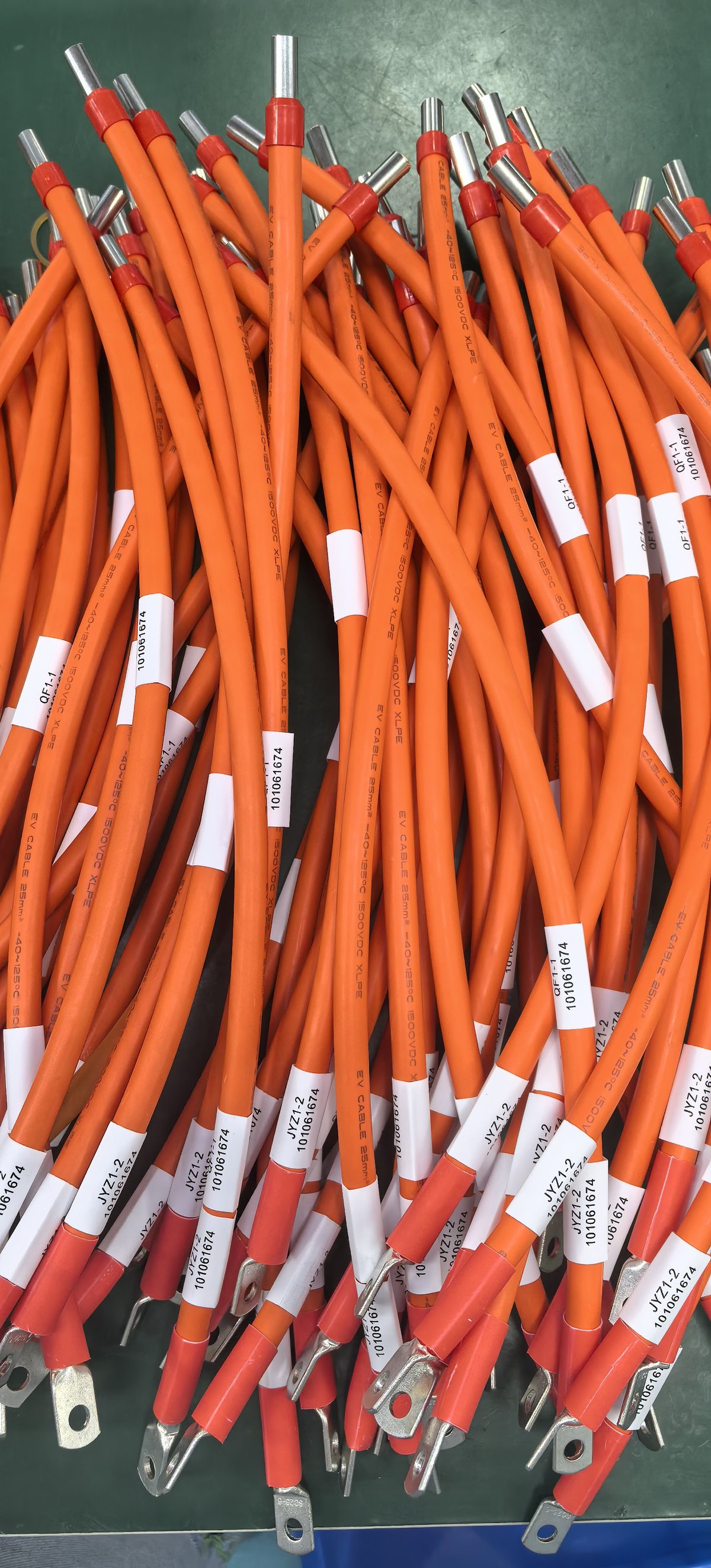
Capacity claims are easy to make and hard to check. This is what sits behind ours — the floor, the equipment and the check at the end of each stage.
The floor
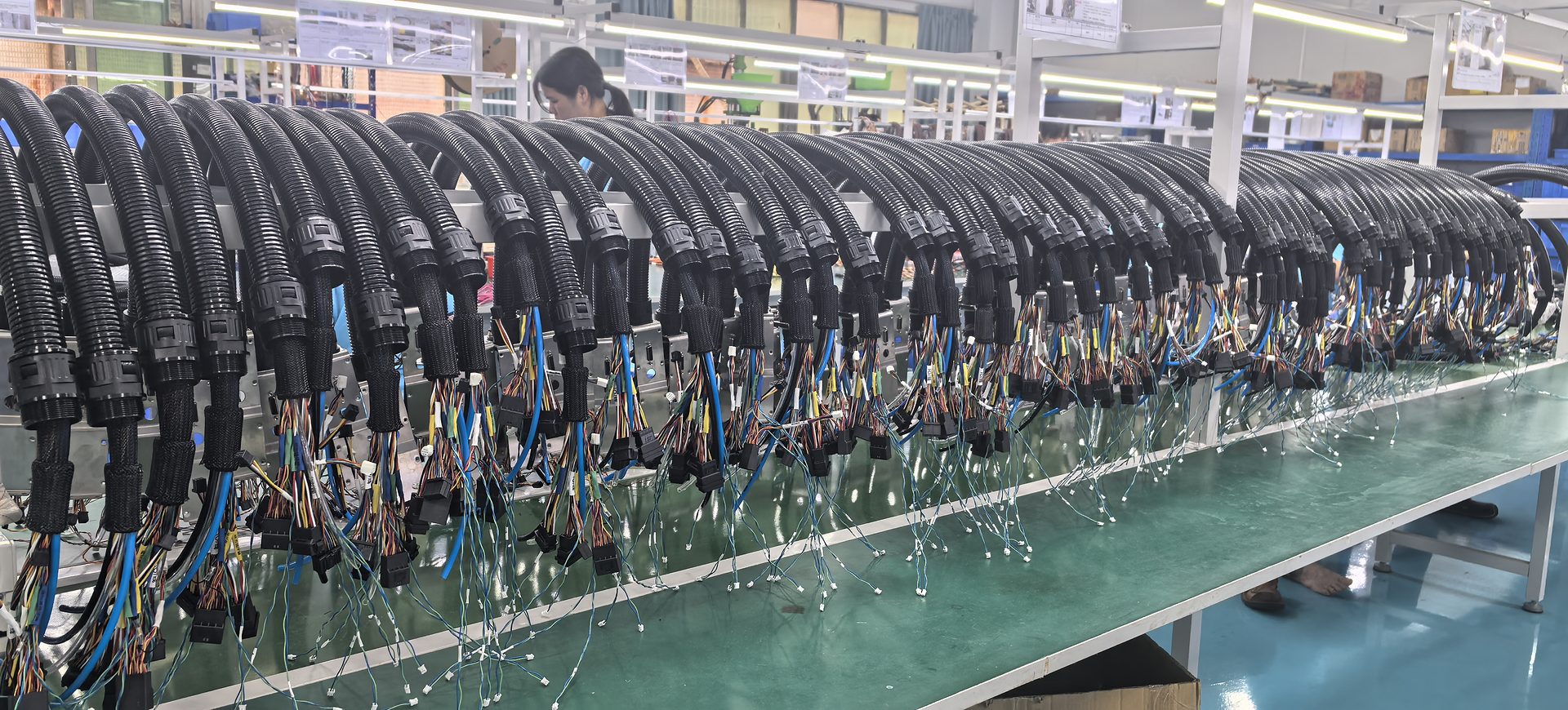
The plant is in Chang'an Town, Dongguan, roughly 3,600 m² under one roof. Sixty-five people cover engineering, production and quality across eight assembly lines. The floor is laid out by process rather than by customer, so a line can be re-tasked between programmes without moving equipment or re-qualifying a cell.
Equipment, by stage
Fifteen semi-automatic machines against five automatic ones is deliberate. Automatic crimping is faster and more consistent on a stable, high-volume circuit, but it is not worth the setup on the long tail of low-volume circuits that make up most of a harness. Keeping both means a programme is not forced into the wrong process to fit the machine.
What each stage is checked against
- Cutting. Length tolerance against the drawing, and a strip-quality check — nicked strands are a latent failure, not a cosmetic one.
- Crimping. Crimp height and pull-off force, measured on a schedule rather than at setup only. Terminal cross-sections are cut and inspected in-house.
- Assembly. Routing against the board, with the operator working from a forming board rather than a photograph.
- End of line. 100% electrical test on the six automatic stations — continuity, and where the drawing calls for it, hipot and resistance limits. Every set is tested, not sampled.
Which programmes run on these lines
Eight lines build all six families, so a line can move between programmes without re-qualifying a cell. Automotive work — engine, chassis and cabin harnesses — runs through the crimp stations with pull-off testing at every terminal. High-voltage EV and energy-storage assemblies add shielded-cable preparation and a hipot station of their own. Industrial automation harnesses are the ones that most often tie up the flex and swing rig, because a robot or drag-chain cable has a cycle count to survive rather than a routing to match.
The in-house laboratory
Five capabilities sit on site rather than at a third party: salt spray, thermal-humidity, flex and swing, pull-force, and terminal micro-section analysis. The point is turnaround on the questions that come up mid-programme — a corrosion question in week three should not cost a fortnight of shipping parts out and back.
The numbers we hold ourselves to
Manufacturing runs under IATF 16949:2016 (certificate 0597346) and ISO 9001:2015 (registration CACQ22Q00816R1). The certified scope is manufacturing of wire harness; product design under Clause 8.3 is excluded, which is worth knowing before you read "IATF certified" as covering design responsibility.
Seeing it
Factory footage of the cutting, crimping and test stages is being published to this blog. If you would rather see the floor live than read about it, ask for a video call — we will walk a camera down the line with the programme manager for your product family.
Frequently asked questions
Can I see the factory before placing an order?
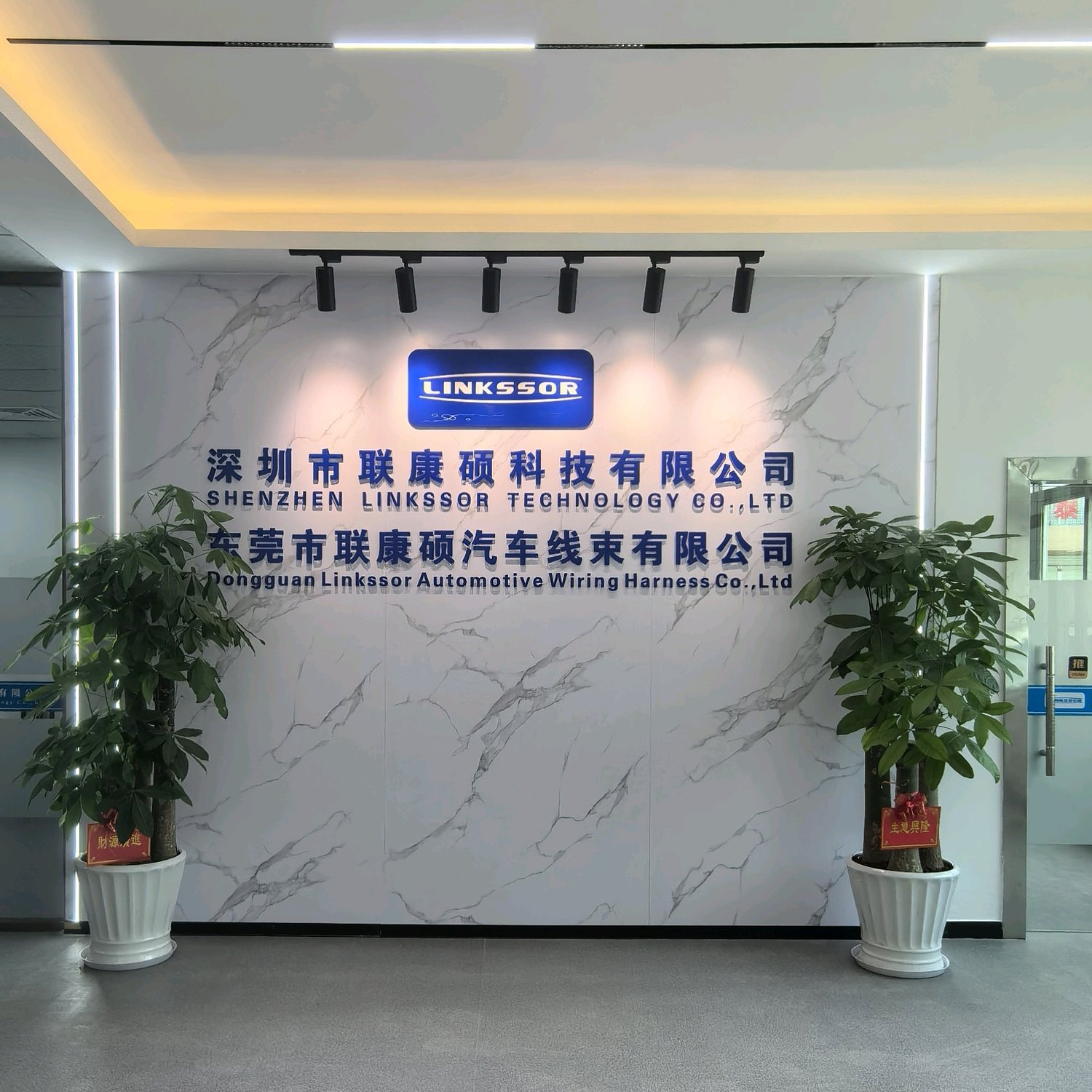
Yes, three ways. Factory footage of the cutting, crimping and test stages is published on this blog. A live video call can be arranged, in which the programme manager for your product family walks a camera down the relevant line and stops at the equipment your part will actually run on. And an on-site audit visit can be scheduled at the plant in Chang'an, Dongguan, which is where manufacturing sits — engineering and commercial contact are handled from the Shenzhen office.
How much of the monthly capacity would my programme use?
Monthly capacity is 100,000 sets across eight assembly lines, but the total is the less useful number. What matters is changeover: the floor is laid out by process rather than by customer, so a line can be re-tasked between programmes without moving equipment or re-qualifying a cell. A mid-volume programme therefore does not queue behind a larger customer for a dedicated line, and a new programme can be introduced without taking capacity away from an existing one.
Does your IATF 16949 certificate cover design?
No. Certificate 0597346 covers manufacturing of wire harness and excludes product design under Clause 8.3. For a build-to-print programme — which is most of what the eight lines run — that is the correct and honest scope: your drawing carries the design responsibility and this plant carries the repeatability. Where a customer would rather have the construction proposed than specified, that work is handled by the engineering office, and who owns the design decision is agreed in writing before the part is quoted.

 Guides & Insights · Sep 24, 2026