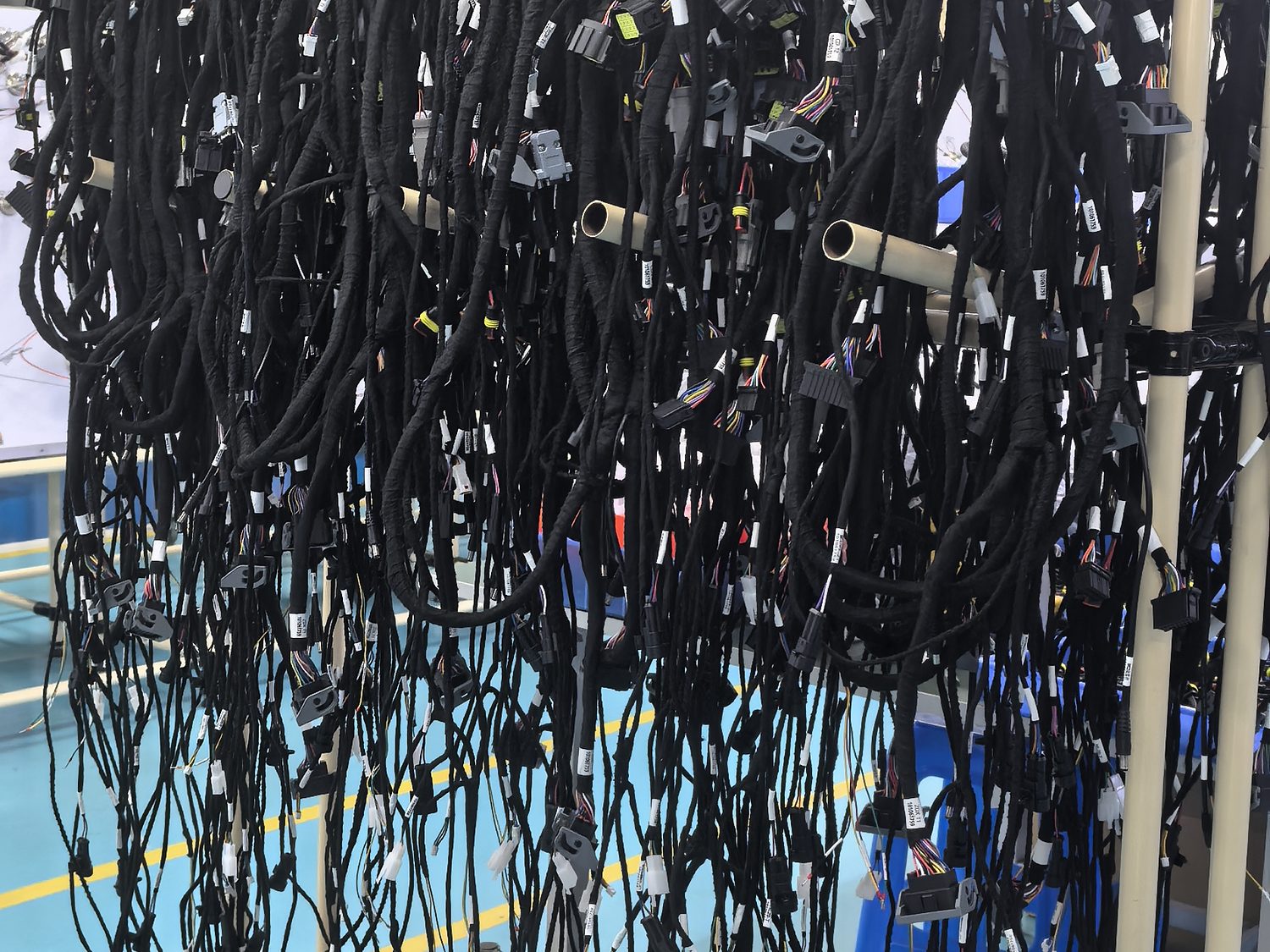
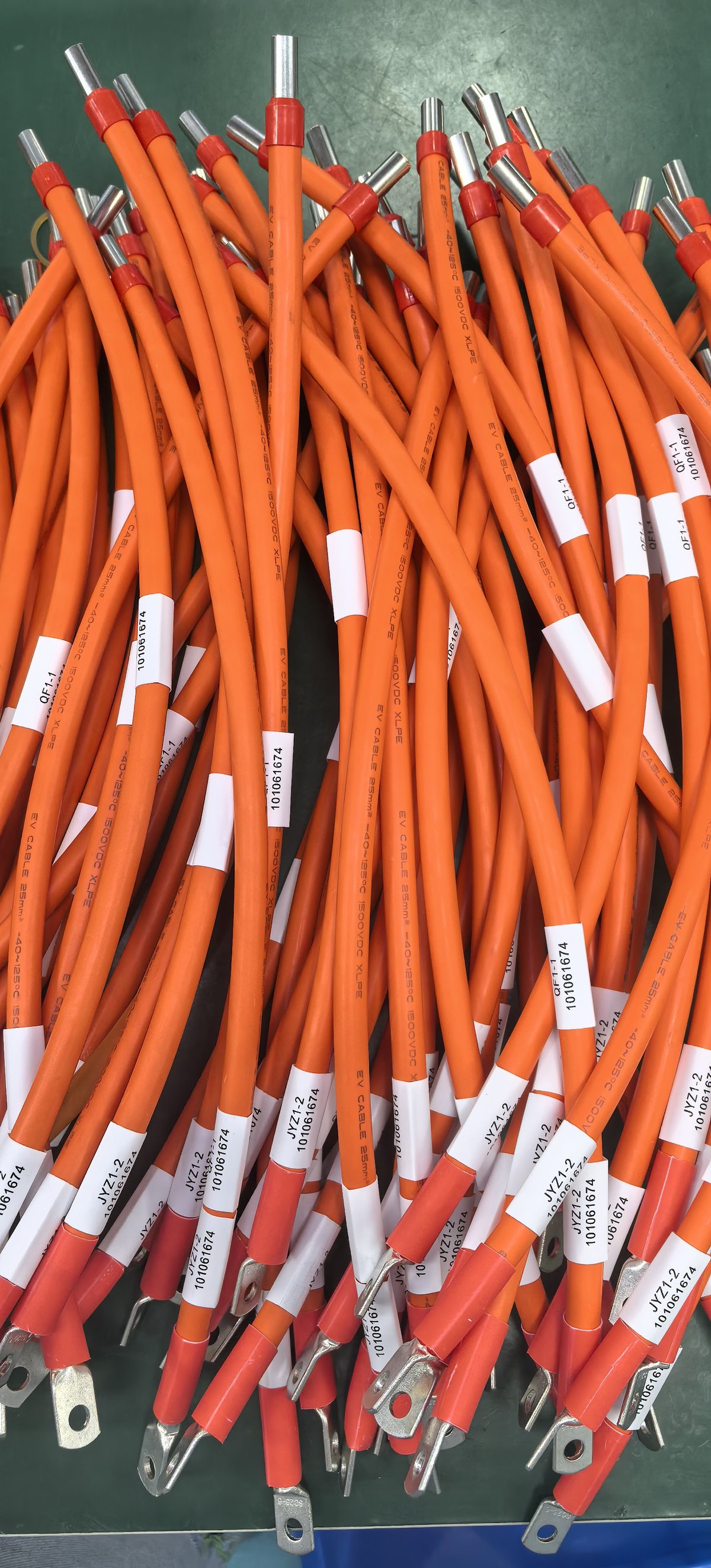
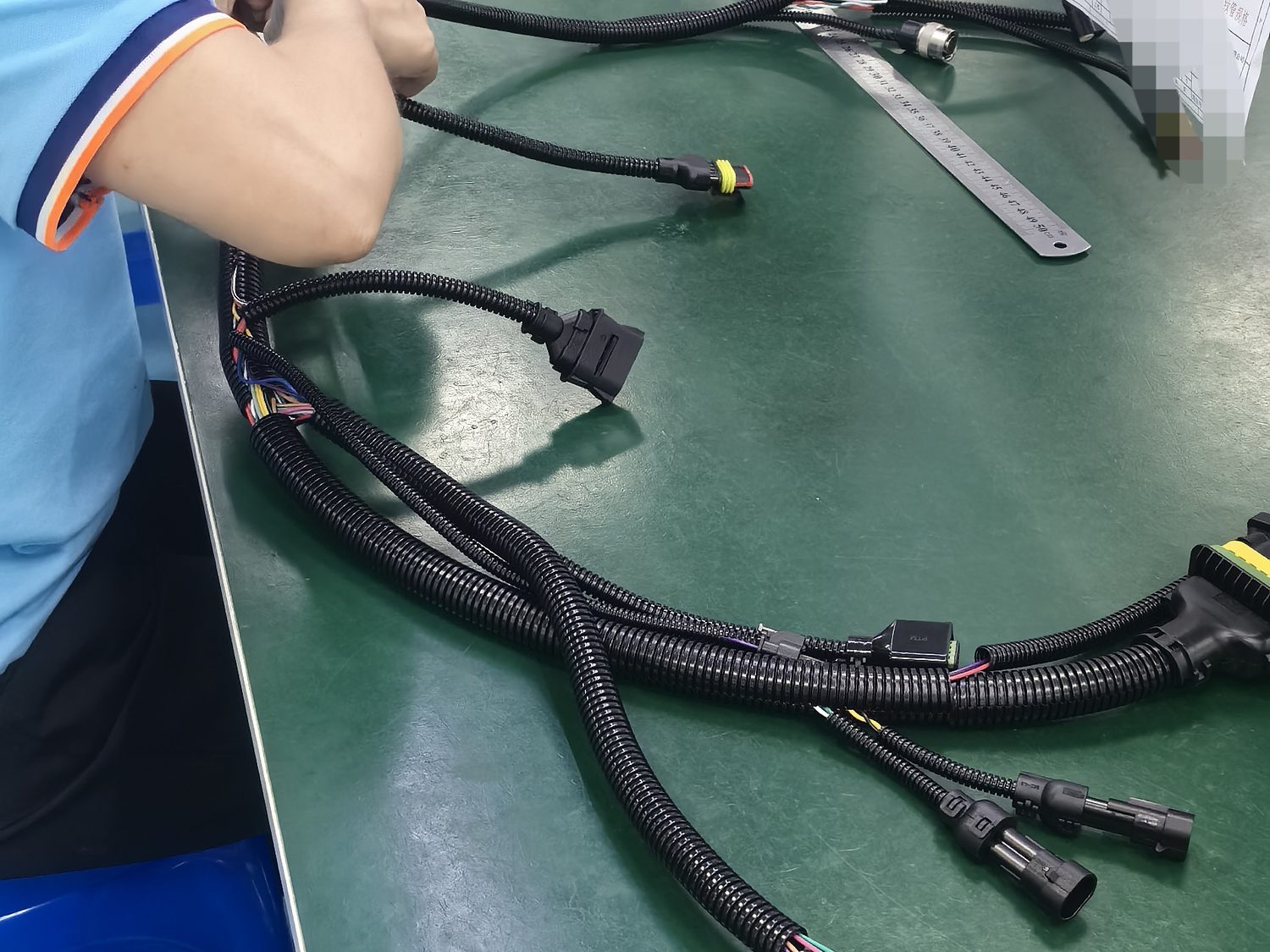
Qualifying a cable assembly supplier tests something different from qualifying a harness supplier, and programmes get into trouble by running the same audit. A harness supplier is asked to reproduce a drawing, so the audit can be about process discipline: crimp verification, test coverage, change control. An assembly supplier is usually the one choosing the construction — the conductor, the shielding, the jacket, the termination — so the audit has to reach the design decisions, and a process-only audit will pass a supplier who is quietly designing your part by accident.
What is different about the assembly audit
Stage 1 — the paper audit
Ask for these before any visit or video call, and read them for what is missing rather than for what is there:
- Quality management certificate, with the scope sentence. If the scope excludes design and you are asking the supplier to choose the construction, one of the two has to change.
- Two comparable test plans from previous programmes — not the reports, the plans. A plan shows what was going to be tested and why. A report only shows what passed.
- A design review record. Who reviewed the construction, against which requirement, and what alternatives were rejected. A supplier who genuinely designs assemblies has these. A supplier who assembles to somebody else's drawing does not.
- A qualification report. For a sealed assembly, the ingress test method and results; for a shielded one, the shield transfer impedance or a continuity limit; for a flex application, the cycle count and the failure criterion.
- The process flow with the machines named, and which steps are subcontracted.
Stage 2 — the process audit
Watch these being done rather than being described. Each one is either present or it is not, and none of them can be performed convincingly on the spot for the first time:
- A pull-off force measurement, on a machine whose calibration label you can read. Ask the operator to do it, not the quality manager.
- A shield termination check. On a shielded assembly this is where most designs silently fail — a braid that is terminated to the shell but not to the designated pin passes a visual inspection and fails a measurement.
- An overmould or sealing process, if the part has one. Ask what the mould is, how many cavities, and how adhesion is verified. Low-pressure overmoulding and potting are different processes with different failure modes, and a supplier who cannot say which one they run is not running either consistently.
- End-of-line test, and specifically whether every unit goes through it. On an assembly the test often has to be custom — measure a hipot, a resistance limit and a shield continuity, not just beep out a continuity check.
- The calibration system, by asking for the interval and the record of the instrument you just watched being used.
Stage 3 — the trial order
The trial order is the audit's real result, and it should be scoped to produce information rather than parts. Three requests make it worth running:
- Ask for the reasoning, not just the parts. Alongside the samples, ask for a short written note on the construction chosen and what was considered and rejected. A supplier who can write that paragraph has an engineering function. A supplier who cannot is a trading company with a workshop, however good the samples look.
- Ask for the test data with limits applied, not a pass stamp.
- Introduce one deliberate change mid-trial — a different connector, a shorter length — and watch how it is handled. This tells you more about the next five years than the samples do.
The five questions that separate assemblers from manufacturers
- "Which processes do you subcontract?" A cable assembly supplier who outsources cutting and crimping has a tolerance stack they do not control. On a part where the crimp is the function, that is the whole product.
- "Who wrote the test plan?" If the answer is "the customer", the supplier has no qualification function; if it is "us, and here it is", they do.
- "What is the failure criterion for the flex test?" A cycle count without a criterion is a marketing number.
- "What happens when a shield termination check fails at end of line?" The answer should describe a scrap decision and a containment action, not a rework.
- "When did you last tell a customer that their requirement was wrong?" Suppliers who design things have had this conversation. Suppliers who assemble things never have.
Red flags worth acting on
- Test data presented as a certificate of conformance rather than as measured results
- A qualification report with no failure criterion, only a pass
- Prototype samples built by the engineering team, with no statement about how production will differ
- A stated capability on a process that is subcontracted out
- A sealed or overmoulded part with no leak test in the process flow
Matching the audit to what you are buying
- An EV or energy-storage high-voltage assembly is the hardest version of this audit, because the supplier is making design decisions under a high-consequence environment. The shielding, termination and sealing decisions all belong in the design review record you asked for in stage one.
- An industrial automation assembly turns the audit towards flex and cycle life. Ask for the test rig, the cycle count achieved and the failure criterion — a supplier who runs a swing rig will have all three.
- An automotive harness is the build-to-print end of the range, where a process-heavy audit is the right instrument. The two audits differ mainly in how much of stage one you insist on.
- A home appliance harness is usually qualified on volume capability and price, and the risk is that the same audit is applied to a supplier who will later be asked to propose a construction. If that is going to happen, ask the stage-one questions first.
Frequently asked questions
What is the difference between a cable assembly manufacturer and an assembler?
Control of the processes that create tolerance. A manufacturer cuts, strips, crimps, seals, overmoulds and tests in house, so it owns the tolerance stack from the conductor to the finished part. An assembler buys prepared wire and connectors and puts them together, which can be perfectly adequate for a simple part and is a real weakness on anything where the crimp or the seal is the function. The practical test is the question "which processes do you subcontract", followed by asking to see the ones they claim to own.
What should I ask for in a first article on a cable assembly?
Four things: dimensional results against the drawing or specification, the electrical results with the limits applied rather than a pass stamp, the qualification evidence for whichever property is critical — ingress protection for a sealed part, shield continuity or transfer impedance for a shielded one, cycle count against a failure criterion for a flexing one — and a short written note on the construction chosen with the alternatives that were rejected. The last item is the one that is most often missing and it is the most informative, because it is the only item on the list that cannot be produced without an engineering function.
How do I audit an overmoulded cable assembly without visiting the plant?
Ask for a live video walk of the moulding area and ask four things on camera: which mould and how many cavities, whether the process is low-pressure overmoulding, potting or injection overmoulding, how adhesion between the moulding and the jacket is verified, and what the leak or ingress test is on the finished part. Then ask to see a rejected part and have the operator explain why it was rejected — the ability to explain a defect convincingly in real time is very hard to fake and is the single most useful five minutes of a remote audit.

 Guides & Insights · Sep 24, 2026