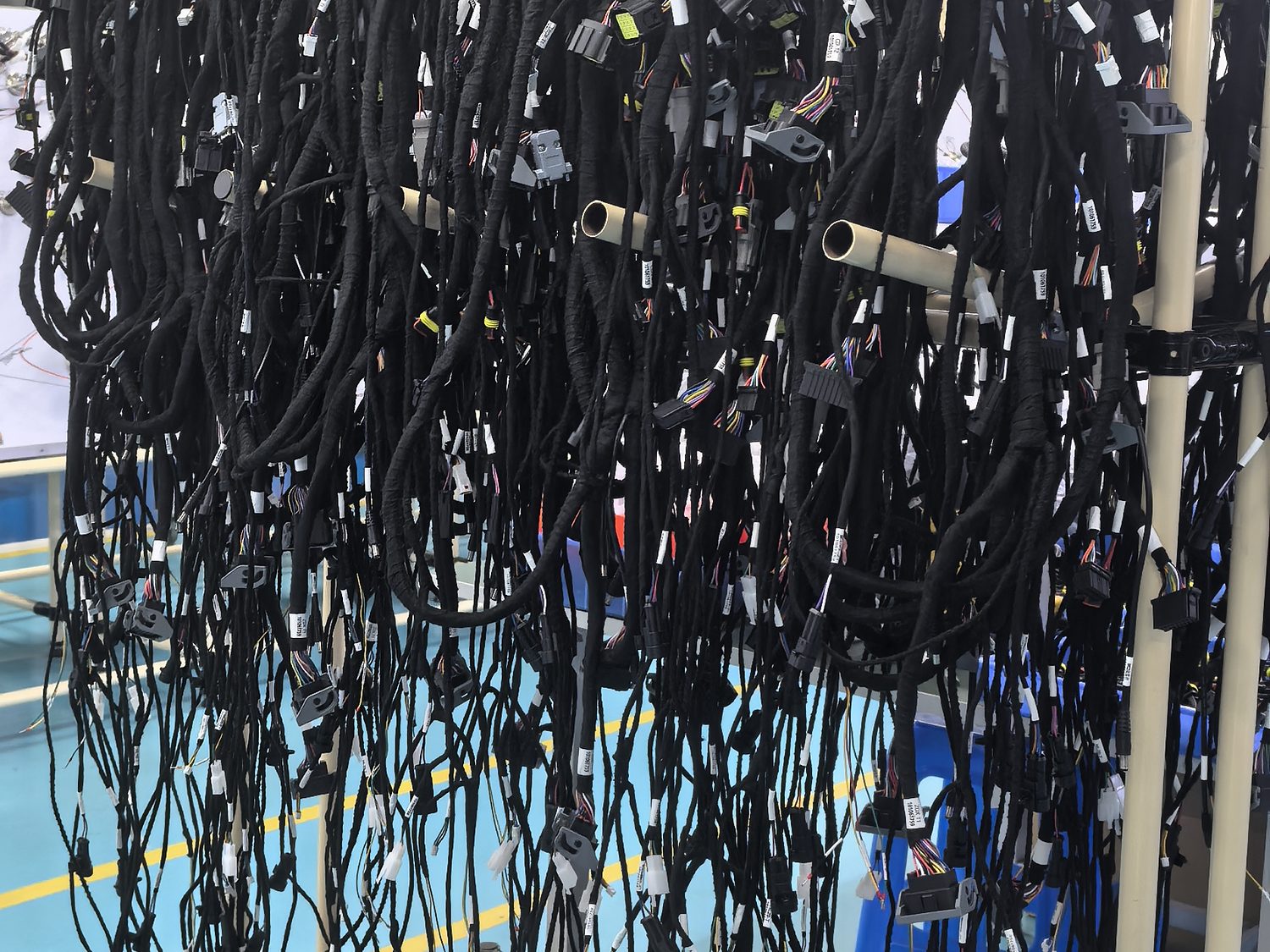
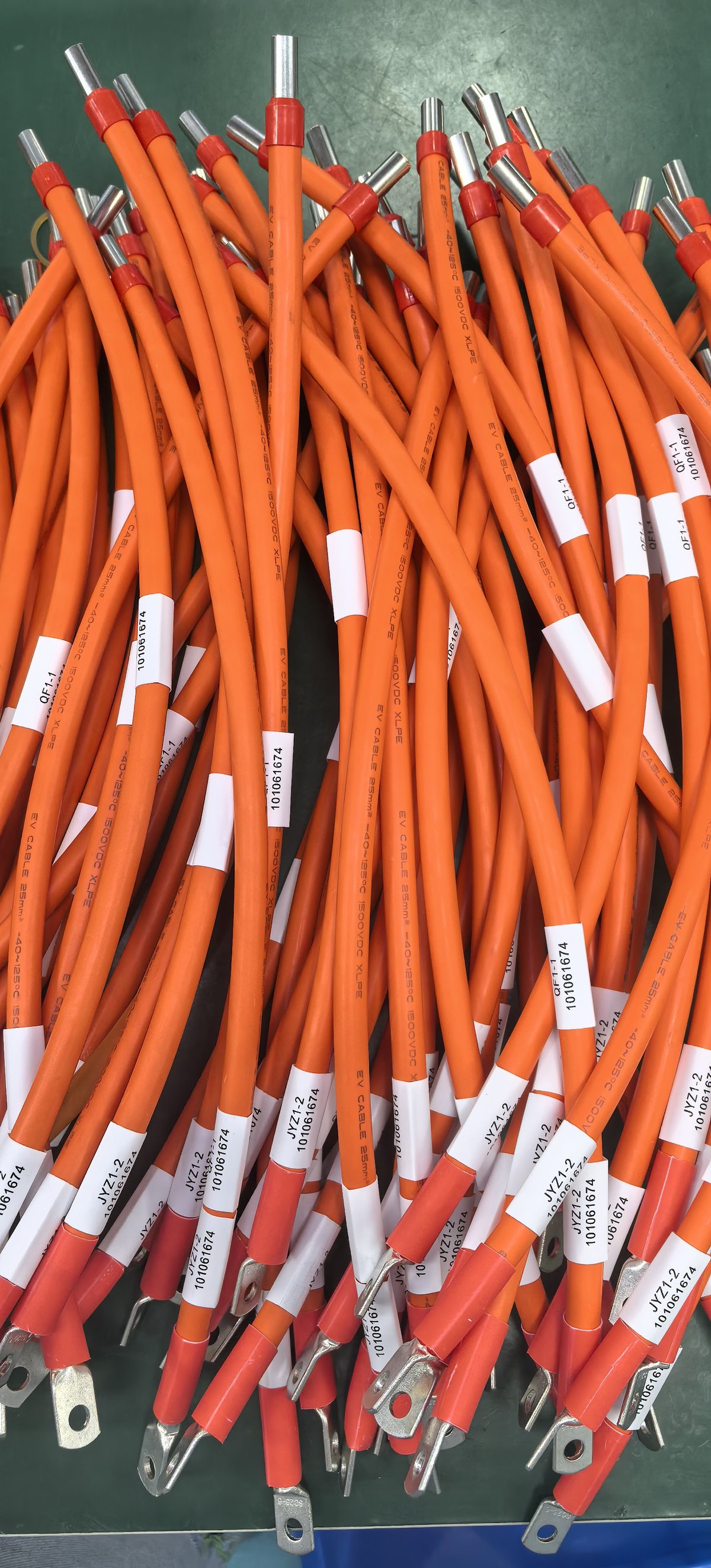
A custom harness has no unit price until six variables are fixed, which is why a supplier who quotes one from an email is giving you a placeholder rather than a price. The useful answer to "how much does it cost" is not a number — it is the list of what moves the number, and which of those things you are still free to change.
Why a price quoted without a drawing is not a price
Two harnesses with the same circuit count, the same length and the same connector count can differ by a factor of three on unit cost. The difference is not margin and it is not supplier efficiency — it is that one of them is a straight run with a few branches and the other is a tightly dressed assembly with sleeving, sealed connectors and a test requirement on every circuit. A quote produced before those questions are answered is a quote for the average of two very different parts.
The six factors
The three factors you actually control
Three of the six are set by the specification, which means they are yours to decide before the enquiry goes out — and they are where a programme gets expensive after the award rather than before it.
- The test requirement. Adding hipot and resistance limits after the first article means the fixture, the cycle time and often the part change. Deciding it in the drawing costs nothing.
- The connector commitment. A house-brand equivalent of an automotive-grade housing is a legitimate engineering decision and can save real money. The trap is deciding it informally — the buyer assumes a branded part, the supplier quotes the equivalent, and the mismatch surfaces at incoming inspection.
- Whether the volume is firm. A forecast allows a supplier to plan material and tooling recovery; a firm annual quantity allows them to commit to an automatic process. Quoting "a few thousand, probably" gets you the price of a process chosen for uncertainty.
Why the cheapest quote is rarely the cheapest part
The cost that does not appear on the quotation is the cost of the escape. On a harness, a single missed crimp in an assembled vehicle is not a credit note — it is a line stoppage, a warranty claim or a recall investigation. Those costs land on the buyer even when the supplier pays for the parts, because the buyer owns the consequence.
That is the argument for reading a quote as a specification document rather than a number. Four questions to a quote, before comparing totals:
- Is the test scope identical between the quotes? Continuity-only against continuity-plus-hipot is not a price difference, it is a different product.
- Are the connectors the specified brand and part numbers?
- Are the samples priced separately, and are they built by the production process?
- Is tooling listed as a separate line or amortised into the unit price, and does it become the buyer's asset?
Where the answers differ, the totals are not comparable and the cheaper one has not won anything.
Making quotes comparable
The simplest way to get comparable numbers is to ask every supplier for the same break-down, and to ask for it as part of the RFQ rather than after the fact. Five lines are enough: wire and insulation, terminals and connectors, labour, tooling or fixture amortisation, and test. A supplier who returns a single unit price and refuses to break it down has either not costed it or does not want you to see the structure — both are reasons to keep looking.
Where it lands in the catalogue
The weighting of the six factors changes with the family you are buying:
- On a home appliance harness, factors 1 and 6 dominate. The volumes are high and the unit price is low, so a fraction of a cent per metre of wire and a stable annual quantity decide the whole commercial case.
- On an automotive wiring harness, factors 3 and 5 dominate. A complex engine or chassis harness is mostly operator minutes, and the test regime is what turns those minutes into a part that can ship.
- On an EV high-voltage cable assembly, factors 2 and 4 dominate. Automotive-grade sealed connectors and a shield-termination process carry most of the cost, and the tooling is real money at low volumes.
- On an industrial automation harness, factor 4 often surprises buyers. A robot or drag-chain cable needs a flex and swing qualification, and that fixture is a one-off that has to be recovered from a smaller volume than a consumer part ever sees.
Frequently asked questions
Can you give me an indicative price per piece before I send a drawing?
Only as a range, and it will be wide enough to be of limited use — which is why the honest answer is to send whatever you have instead. A drawing, a sample, or a written description of the circuit count, the connector types and the environment is enough to quote from. If you genuinely have nothing but a target cost, send the target and the annual volume; a supplier can then tell you which of the six factors has to move to reach it, which is more useful than a price that turns out to be unreachable at the first drawing revision.
Is there a minimum order quantity for a custom wire harness?
It depends on the part rather than on a policy number, which is why ours is quoted per project. The real driver is tooling: an assembly that needs a forming board, a test fixture or a sealing mould has a one-off cost that has to be spread over the order, so a low first order is possible but the amortisation shows up in the unit price. A part that can be built on a semi-automatic line from standard terminals has much less of a floor. If your requirement is genuinely small, say so up front and ask for the tooling cost as a separate line — that is the number that decides whether a small first order makes sense.
Why do quotes for the same harness differ so much between suppliers?
Almost never because of margin. The usual causes are different assumptions about the terminal brand, a sample priced as though it were production, a test scope that differs between quotes, or the awkward minority of circuits quoted at the same rate as the easy majority. None of those are visible on a quotation form, which is why asking for a five-line break-down is worth more than asking for a best price. If two quotes differ by 40% and the break-downs match line for line, then something about the specification is genuinely ambiguous and the drawing needs fixing before the award, not after.

 Guides & Insights · Sep 24, 2026